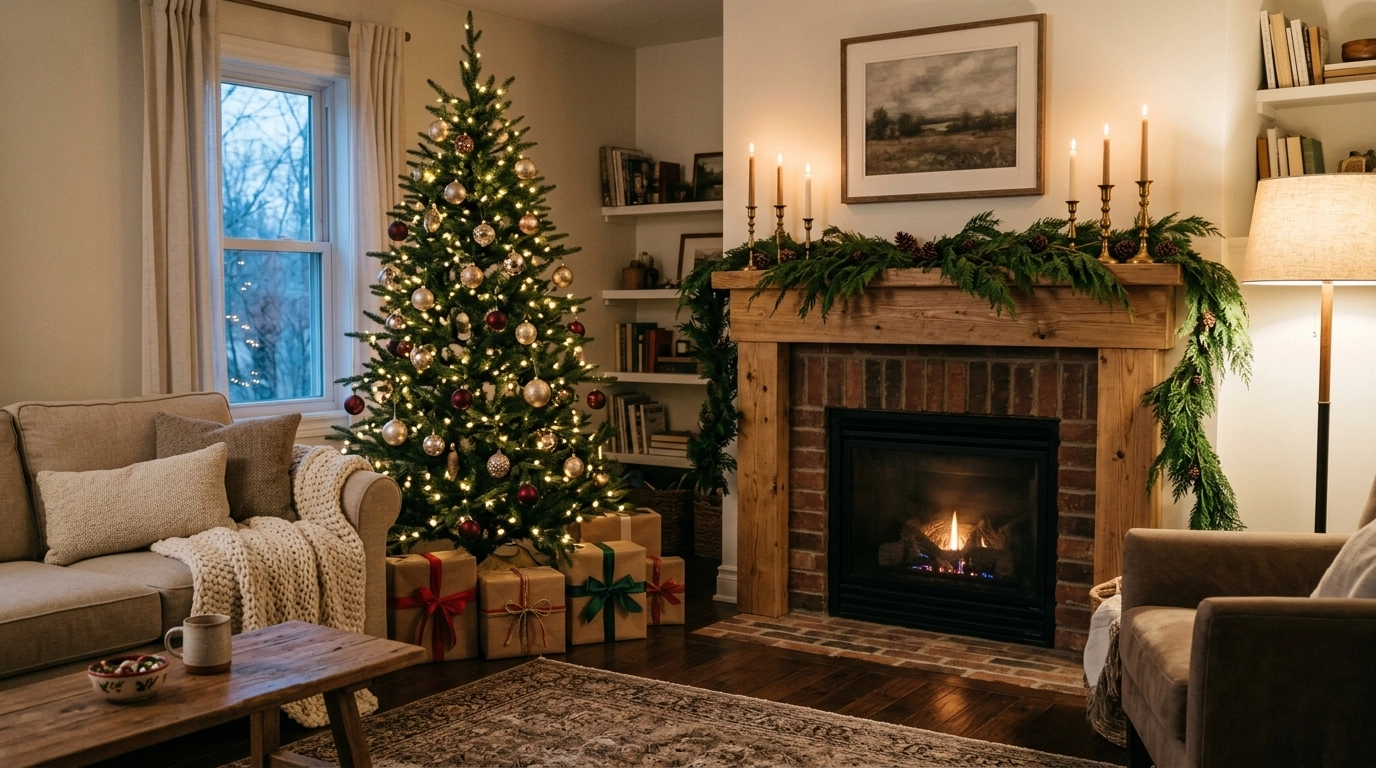
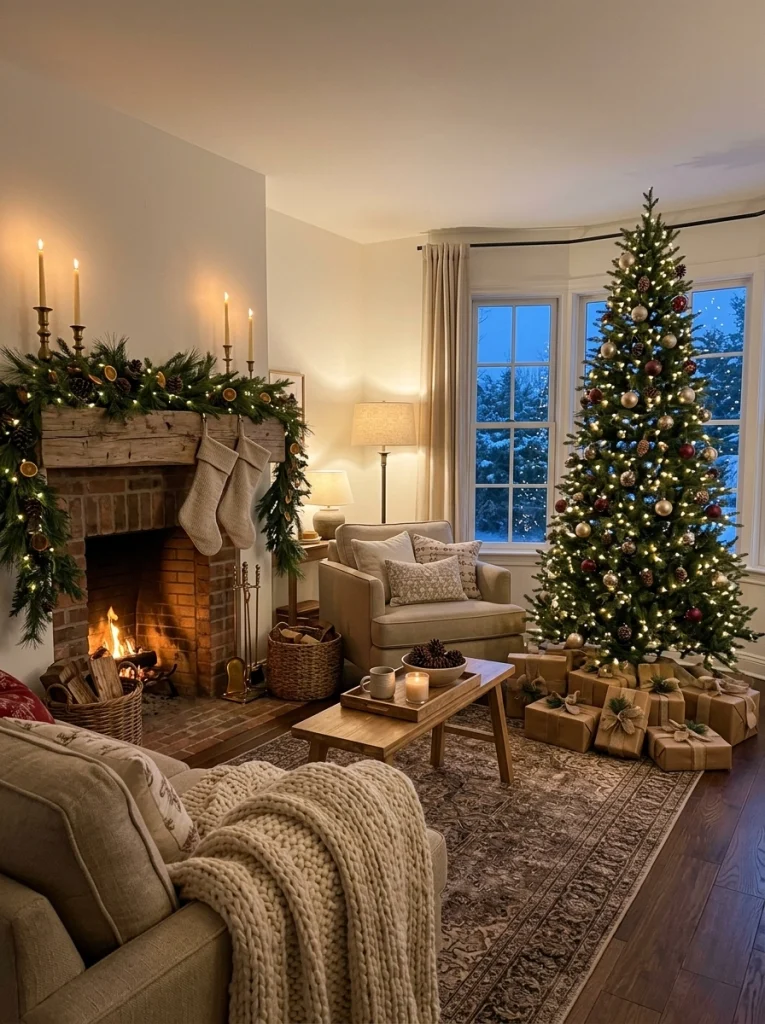
A home can feel surprisingly unfinished at Christmas, even after you’ve unpacked the ornaments and hung a wreath on the front door. The tree looks pretty, but the rest of the living room feels ordinary, the entryway collects clutter, and every extra decoration seems to take up another inch of space.
Learning how to decorate your home for Christmas is really about making a few thoughtful changes instead of filling every corner with holiday accessories. In about 3 to 4 hours, with a budget of $75 to $150, you can create a warm, festive home using string lights, greenery, soft textiles, and decorations you already own.
You don’t have to buy an entirely new collection of Christmas decor, either. A simple color palette, a few well-placed decorations, and comfortable lighting can make your home feel ready for the holidays without crowding your everyday living space.
Time: 3–4 hours | Cost: around $75–$150 | Difficulty: Easy | Best for: Living rooms, entryways, dining areas, and small homes
What You’ll Need

- Warm white LED string lights, 2 strands, around $12–$20
- Faux pine garland, 6 feet, around $12–$20
- Christmas ornaments in two or three coordinating colors, around $10–$20
- Velvet or satin ribbon, 5 yards, around $5–$8
- Removable adhesive hooks, a pack of 8, around $6–$10
- Cream or plaid throw blanket, around $15–$25
- Flameless LED candles, a set of 3, around $10–$15
- Kraft wrapping paper and ribbon, around $5–$8
- Scissors, tape measure, and painter’s tape, around $0–$10 if you don’t already own them
Estimated total: $75–$150, depending on what you already have. You can find affordable decorations at Target, Walmart, IKEA, HomeGoods, and local thrift stores.
Choose a Christmas Color Palette Before Decorating
Start by looking at the colors already in your home. If your sofa is beige and your furniture is natural wood, cream, forest green, and brass will fit comfortably. For a traditional look, pair deep red with evergreen and warm white. A white, silver, and pale wood palette works beautifully in a bright, minimalist room.
Choose three main colors and repeat them throughout the living room, entryway, and dining area. You don’t have to remove every decoration that doesn’t match, but keep the strongest colors consistent.
Pull out your existing ornaments and arrange them on a table before shopping. I like to separate them into piles by color because it quickly shows what I have enough of and what is actually missing. The common mistake is buying lots of unrelated accessories before deciding on a style.
Clear Surfaces and Make Room for Christmas Decor
Before adding anything festive, spend 15–20 minutes clearing your coffee table, entryway console, mantel, and dining table. Put away everyday objects you won’t use during the holidays, such as stacks of mail, decorative bowls, and extra cushions.
Keep the items that serve a purpose. A tray can hold remotes, while a small basket beside the sofa gives blankets a home. This leaves room for seasonal decorations without making the room harder to use.
In a small apartment, remove one ordinary accessory for every Christmas item you add. For example, replace two small coffee-table ornaments with a single greenery arrangement and a candle. Don’t pile decorations on top of existing clutter, since even beautiful objects look messy when every surface is full.
Decorate Your Home for Christmas Around One Main Focal Point
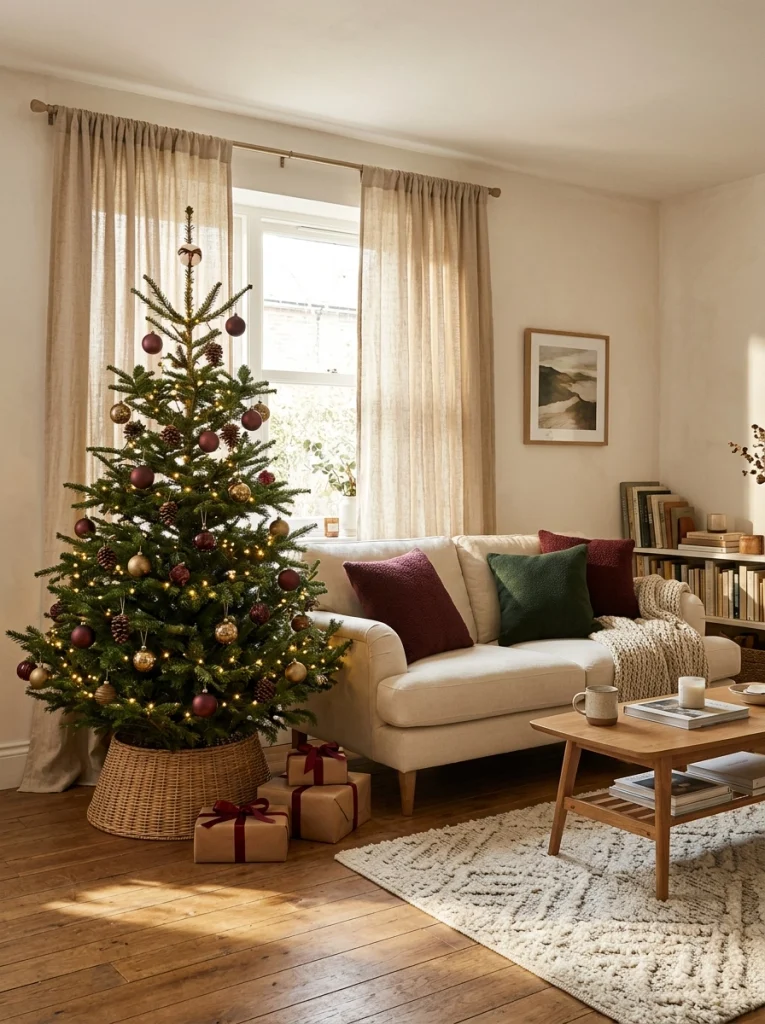
Pick one main feature for the room, usually a Christmas tree, fireplace mantel, or large window. If you’re decorating a small living room, a 5- to 6-foot slim tree often provides plenty of holiday impact without blocking a walkway.
Place the tree where it can be seen from the main seating area, but keep it at least 24 inches away from heaters and fireplaces. Before decorating, check that the nearest outlet is reachable without running a cord across a walking path.
For a balanced tree, start with lights, then add larger ornaments, followed by smaller decorations and ribbon. Use ornaments in clusters of three at different heights instead of spacing every piece evenly. Avoid filling every branch with decorations. Leaving a little greenery visible gives the tree a more natural appearance.
Add Warm Lighting for a Softer Holiday Atmosphere
Overhead lights can make Christmas decorations look flat, especially at night. Use several smaller light sources instead, such as tree lights, a table lamp, and flameless candles on a sideboard.
Choose warm white bulbs around 2700K for a soft, golden glow. If you’re decorating a mantel or bookshelf, measure the area before buying lights. A 6-foot garland usually works well on a small mantel, while a longer shelf may require two strands of battery-powered lights.

Secure garland with removable hooks rated for its weight, and tuck the battery pack behind the greenery where you can still reach it. Don’t cover electrical outlets or trap cords beneath heavy furniture. For real candles, keep flames away from greenery, curtains, and other decorations.
Dress Up the Sofa With Christmas Textures
You don’t need a new sofa or an expensive holiday cushion collection to make your living room feel seasonal. Swap two everyday pillow covers for velvet, plaid, or textured cream covers, then fold a knit throw over one arm of the sofa.
A practical combination is two 18- to 20-inch decorative pillows in complementary colors and one soft blanket. If your sofa is already patterned, choose solid-colored Christmas cushions rather than adding more competing prints.
Check Target, IKEA, or Walmart for seasonal pillow covers, which are often less expensive than buying complete pillows. You can also use a red wool blanket you already own. The mistake to avoid is choosing scratchy or heavily embellished fabrics that look festive but aren’t comfortable for everyday lounging.
For more inspiration, see [INTERNAL LINK: article about cozy winter living room decorating ideas].
Style the Entryway With a Simple Holiday Welcome
Your entryway sets the mood before anyone reaches the living room. Start by keeping the area near the door clear enough for shoes, bags, and guests to move around comfortably.
Hang a 20- to 24-inch wreath on the front door using an appropriate over-door hanger or removable outdoor-rated hook. For a console table, group a small evergreen arrangement, a bowl for keys, and one flameless candle on a tray. Keep the arrangement under 12 inches tall if you want to maintain an open view across a narrow hallway.
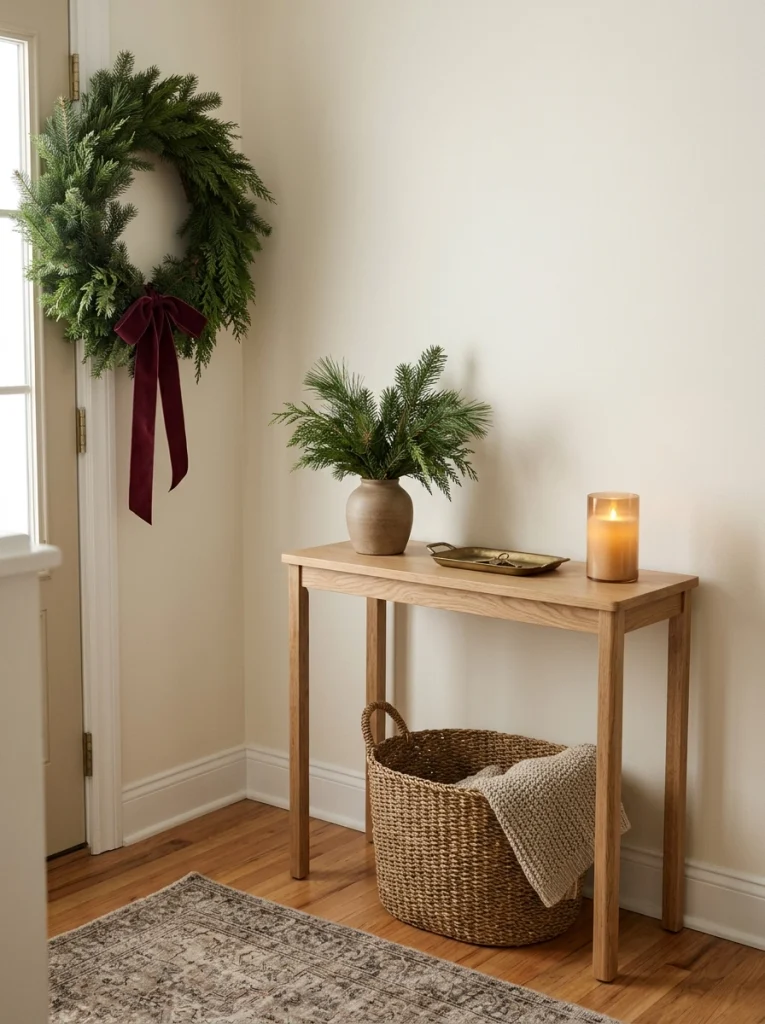
If the entryway is too narrow for a table, use a wreath and a small basket instead. Avoid placing gifts, lanterns, or large floor decorations where people step inside. A clear walkway is more welcoming than a crowded display.
Bring Natural Greenery Into the Dining Area
A dining table can look festive without a large centerpiece that gets in the way of dinner. Lay a simple linen runner down the middle, then arrange a short pine garland or a row of small evergreen sprigs along it.
For a table seating four to six people, keep the centerpiece around 8–10 inches tall so diners can see one another. Add three small flameless candles and a few pinecones for texture. If you prefer a traditional Christmas look, tie narrow red ribbons around folded napkins.
Real greenery smells lovely, but it can shed needles as it dries. Place fresh branches on a washable runner and check them every few days. Keep greenery away from hot bulbs, open flames, and food-contact areas. If your table is small, use a single low bowl with ornaments instead of a full garland.
Finish With Small Christmas Details in Unexpected Places
Once the main rooms are decorated, add two or three small seasonal touches where they’ll be noticed. A tiny tabletop tree on a kitchen counter, a bowl of ornaments on a bookshelf, or a festive hand towel in the powder room is usually enough.
Use one small arrangement per surface rather than scattering miniature decorations everywhere. For example, place a ceramic house and a battery-powered tea light on a bookshelf, leaving the surrounding books and framed photos in place.
Wrap a few empty boxes in kraft paper and tie them with velvet ribbon if you want the look of presents under the tree before shopping is finished. Just don’t use valuable counter space for decorations you have to move every time you cook. The best finishing touches fit naturally into the way you already use your home.
Mistakes That Ruin the Result
- Using too many colors: Limit the main palette to three colors, then repeat them across the tree, sofa, and dining table.
- Filling every surface: Remove an everyday accessory before adding a seasonal one.
- Using harsh white lighting: Choose warm white bulbs around 2700K for a softer evening glow.
- Blocking walkways with decorations: Leave about 30–36 inches for a main walking route wherever the room layout allows, and keep exits clear.
Frequently Asked Questions
Q: How to decorate your home for Christmas on a small budget?
A: Start with the decorations you already own, then spend money on warm white lights, greenery, and a few coordinated ornaments. A budget of $50–$75 can be enough for a small living room if you reuse your pillows, blankets, and existing tree decorations.
Q: When should I start decorating my home for Christmas?
A: Many households begin decorating in mid-November or the weekend after Thanksgiving. Choose a weekend when you have a few uninterrupted hours to decorate without rushing.
Q: How can I make my home look cozy at Christmas?
A: Combine warm lighting, soft blankets, natural greenery, and a limited color palette. Use lamps and tree lights in the evening instead of relying only on overhead lighting.
Q: How do I decorate a small home for Christmas without clutter?
A: Choose one main focal point, such as a slim tree, and decorate a few smaller areas around it. Use wall-mounted wreaths, tabletop arrangements, and decorations that don’t interfere with daily activities.
Q: What Christmas decorations should I buy first?
A: Begin with warm white string lights, a wreath or garland, and ornaments that match your existing furniture and colors. Add cushions, ribbons, and smaller decorative pieces only after the main areas are finished.
Q: How can I make Christmas decorations look expensive on a budget?
A: Repeat a small set of colors, group ornaments in coordinated clusters, and use materials such as velvet ribbon, natural greenery, and kraft paper. A few carefully arranged pieces usually look better than a room packed with inexpensive decorations.
[Image Prompt: A photorealistic final wide-angle photograph of a finished Christmas home interior combining a softly lit living room and dining corner, a slim evergreen tree with red and gold ornaments, cream knit textiles, pine garland, a simple table centerpiece, wrapped kraft-paper gifts, and warm lamps. Airy layout with clear walkways, natural evening light, realistic lived-in styling, no people, no text or words anywhere in the image.]
[Alt Text: A finished cozy Christmas home with coordinated holiday decorations, warm lighting, greenery, and festive living room accents.]
Make Your Home Feel Ready for Christmas This Weekend
You don’t have to decorate every room or spend an entire paycheck to create a home that feels festive. Choose a color palette, start with your main focal point, and add warm lighting, greenery, and comfortable textiles where they’ll make the biggest difference. Set aside a Saturday afternoon, put on your favorite Christmas playlist, and work through one room at a time. By the end of the weekend, your home will feel warm, welcoming, and ready for holiday gatherings without losing the comfort and breathing room you enjoy the rest of the year.