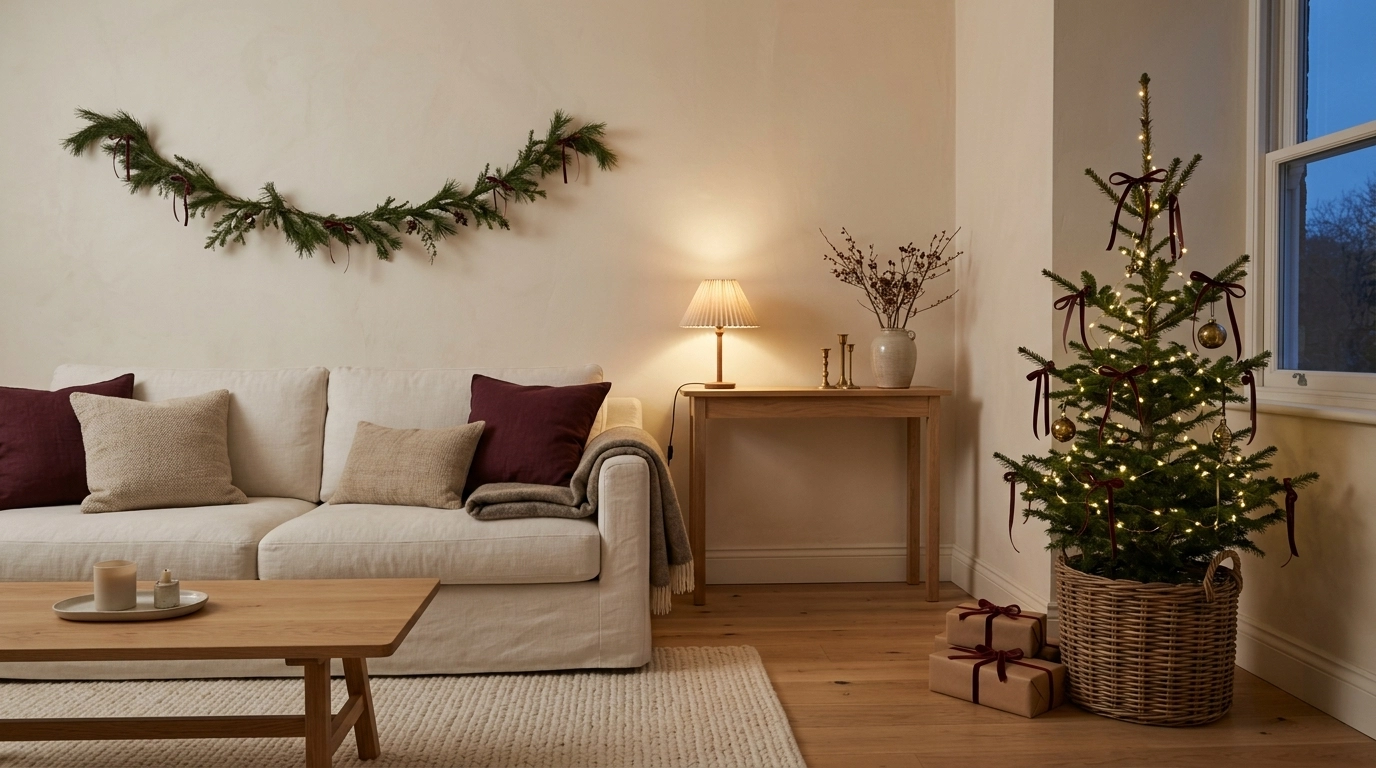
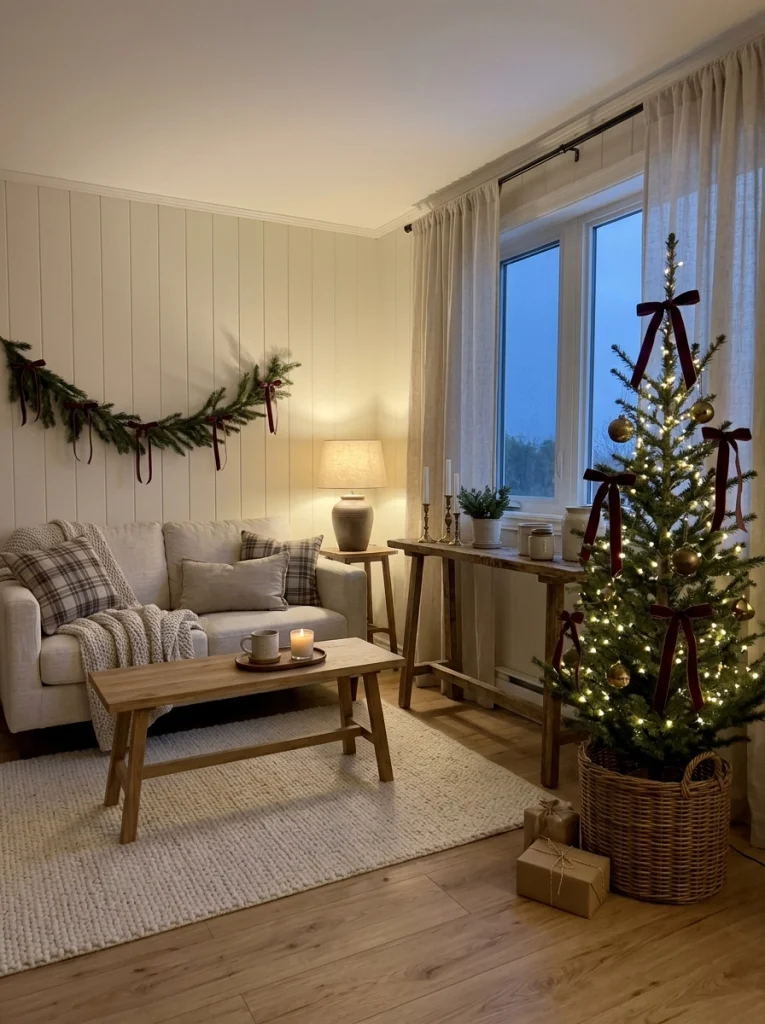
Decorating a small home for Christmas can get messy surprisingly fast. One minute, there’s a little garland on the mantel. The next, the coffee table is covered in ornaments, the entryway is blocked by gift baskets, and there’s barely room to walk around the tree. Small rooms don’t need less Christmas spirit. They just need a little more planning.
The trick to learning how to decorate a small home for Christmas is to work with the space you already have. In about 2 to 3 hours and for around $50 to $100, you can create a warm, festive home with a slim tree, glowing lights, natural greenery, and a few meaningful decorations. Most of the ideas below work in apartments, tiny living rooms, studio spaces, and rental homes, even if you don’t have a mantel or a dedicated dining room.
Time: 2–3 hours | Cost: around $50–$100 | Difficulty: Easy | Best for: Small homes, apartments, studios, and compact living rooms
What You’ll Need
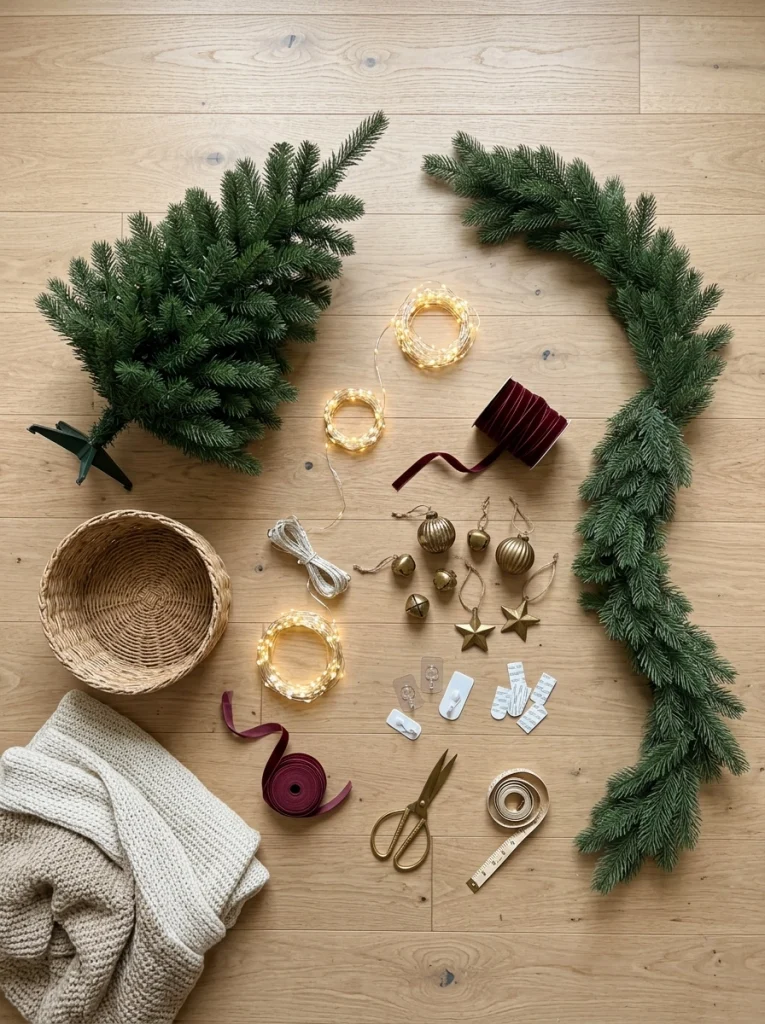
- Slim artificial Christmas tree, 4 to 5 feet tall: around $25–$45 at Walmart or Target.
- Warm white LED string lights, 100-count: around $8–$12.
- Mini ornaments, 12 to 24 pieces: around $6–$12.
- Velvet ribbon, 5 yards: around $4–$7.
- Faux pine garland, 6 feet: around $8–$15.
- Removable adhesive hooks, a pack of 6: around $5–$8.
- Woven basket or fabric storage bin: around $8–$15.
- Scissors and measuring tape: around $5 if you don’t already own them.
- Neutral throw pillow covers or a seasonal blanket: around $8–$15.
Estimated total: $77–$134 if you buy everything new. You can get closer to $50 by using an existing tree, reusing ornaments, and skipping the extra textiles.
1. Clear One Small Area Before Decorating
Before unpacking a single ornament, spend 15 minutes clearing the surfaces you plan to decorate. Choose two or three areas, such as the TV console, a windowsill, and the entryway shelf. Put everyday mail, chargers, spare candles, and decorative objects into a temporary storage basket.
This simple reset gives holiday decorations room to stand out. You don’t have to empty every shelf in your home. Just remove enough items to make space for greenery, lights, or a small collection of ornaments. A common mistake is adding Christmas decorations on top of everything already there. That creates visual clutter before you’ve even hung a wreath.
Keep a small box nearby for items you’ll return to their usual places after the holidays.
2. Choose a Slim Tree That Fits Your Floor Plan
A Christmas tree is often the main event, but a wide tree can swallow a small living room. Measure the available floor space before buying one. For a compact room, a 24- to 30-inch-wide tree that’s 4 to 5 feet tall usually works well beside a sofa, near a window, or in an unused corner.
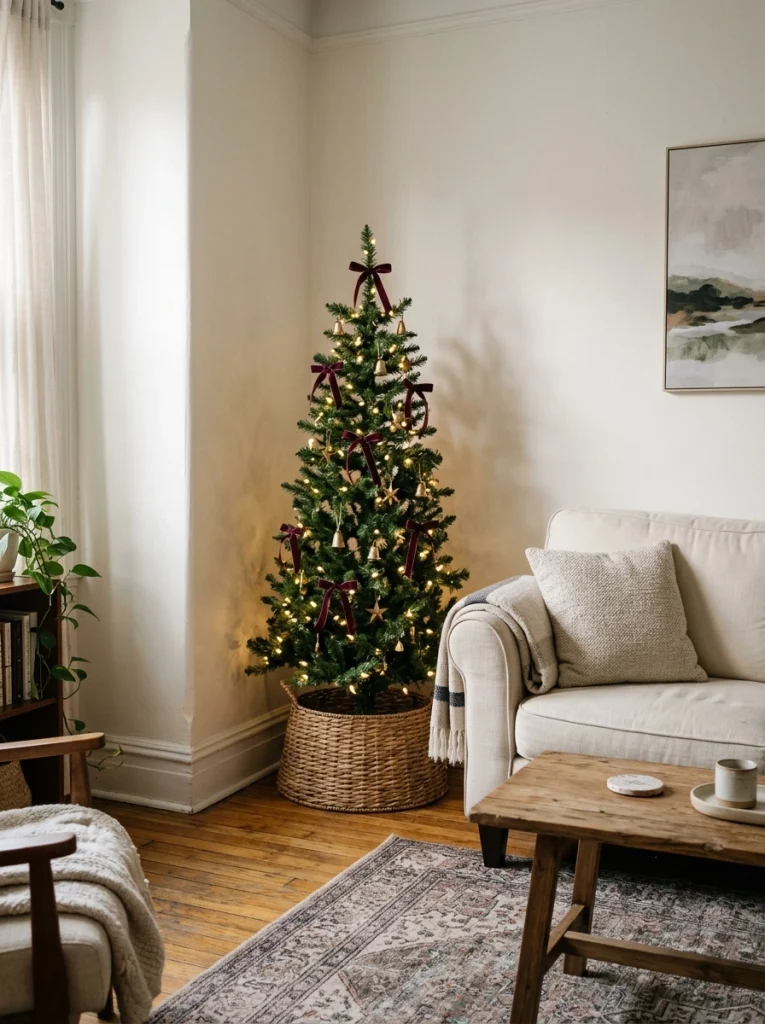
Check the tree’s width at its widest branches, not just the base. Leave about 30 inches for a comfortable walking path wherever possible. If you have almost no floor space, use a tabletop tree on a stable console or side table. A wall-mounted wooden tree made from lightweight branches is another good choice for renters who want to avoid moving furniture.
Don’t buy a full-size tree simply because it looks impressive in a store display. Your living room layout matters more than the tree’s height.
3. Stick to Three Christmas Colors
A small room can feel busy when every ornament, pillow, and ribbon introduces a different color. Pick three main colors and repeat them around the home. Cream, green, and brass create a warm traditional look, while white, natural wood, and muted gold feel softer and more Scandinavian.
Use those colors across your tree, textiles, and tabletop decorations. For example, tie six burgundy ribbons around a green tree, add a cream throw to the sofa, and place two brass candleholders on the console. You don’t need matching products from one collection. A few repeated shades are enough to connect the room.
The mistake to avoid is buying an entirely new set of decorations just to match a theme. Keep the ornaments you love and move the odd colors to another room for the season.
4. Decorate Vertical Spaces Instead of Adding More Furniture
When floor space is limited, look up. A bare wall, the top of a bookcase, or a narrow window frame can hold holiday decorations without taking up another inch of walking space.
Hang a lightweight wreath above a console or attach a short pine garland along a shelf using removable hooks rated for the garland’s weight. Measure the area first, then space the hooks roughly 12 to 18 inches apart so the greenery doesn’t sag. Follow the adhesive manufacturer’s instructions for cleaning the surface and waiting before hanging anything.
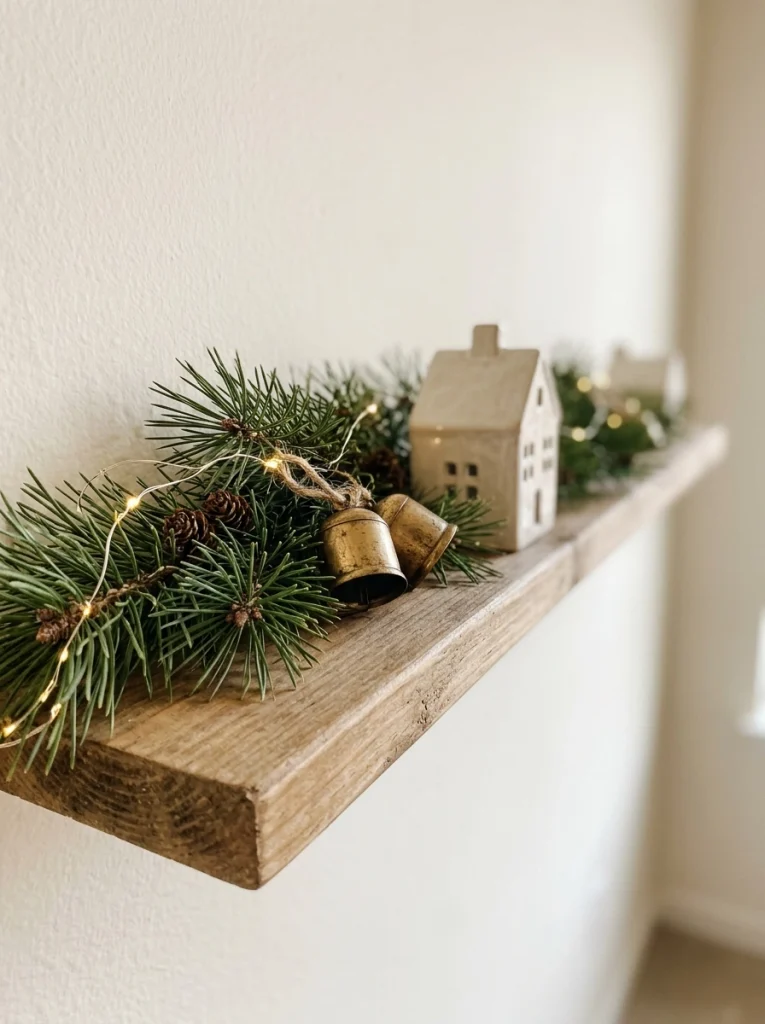
Avoid covering the entire wall with signs, stockings, wreaths, and framed prints. One well-styled vertical area often looks better than five competing displays. If you’re renting, this [INTERNAL LINK: article about renter-friendly Christmas wall decor] can help you find more ways to decorate without drilling holes.
5. Add Warm Lighting in Two or Three Places
Lighting gives a small home that cozy December feeling without requiring piles of decorations. Use warm white LED lights on the tree, a short strand around a bookshelf, or a battery-operated light string inside a glass vase.
Start with 2,700K warm white lighting if you’re buying bulbs or lamps labeled by color temperature. This shade creates a soft glow rather than the cool, bluish look of some bright white LEDs. Place lights in two or three locations around the room, such as the tree and the console, instead of wrapping every shelf and doorway.
Check battery packs and cords before arranging furniture around them. Keep cords away from walking paths, and never drape lights over fabric lampshades or use indoor-rated lights outdoors.
For extra coziness, turn off the overhead light in the evening and use your usual table lamp alongside the Christmas lights. The room will feel festive without another decorative object in sight.
6. Style the Coffee Table With Just Three Items
A coffee table in a small living room has to earn its space. It holds drinks, remotes, snacks, and sometimes a laptop, so avoid turning it into a permanent Christmas display.
Place a 10- to 12-inch tray on one side of the table. Add a small vase of evergreen clippings, one candle in a sturdy holder, and a little bowl of ornaments or pinecones. Keep the arrangement low enough that you can see across the room while sitting on the sofa.
A useful rule is to leave at least half the tabletop clear. If your table is only 30 inches wide, a smaller tray measuring 8 by 12 inches is plenty. Skip tall centerpieces that make the room feel cramped or force you to move decorations every time you need somewhere to set a mug.
7. Use Baskets to Hide Everyday Clutter
Christmas decorations look much better when the ordinary mess has somewhere to go. A woven basket beside the sofa can hold blankets, while a lidded fabric bin on a shelf can store spare ornaments, gift tags, and wrapping supplies.
Choose one or two storage baskets that suit your existing furniture. A 12-inch basket is useful beside an armchair, while a longer 16- to 20-inch basket can sit beneath a console. Neutral woven styles work particularly well with evergreen branches, cream textiles, and natural wood.
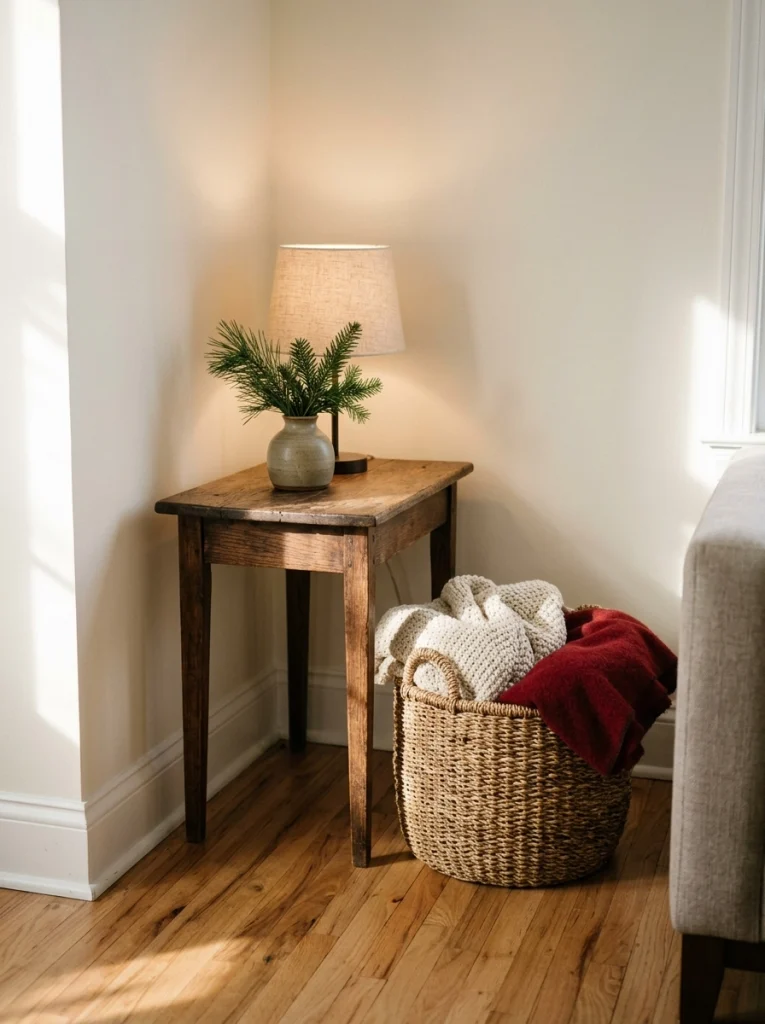
Don’t fill every basket with decorative items. Give each one a practical job, and leave the lid or top easy to access. That way, clearing the room for guests takes minutes instead of turning into another decorating project.
8. Decorate the Entryway With a Small, Simple Display
The entryway sets the tone for your home, but it’s also where shoes, coats, bags, and deliveries tend to collect. Keep the Christmas display narrow enough that people can come through the door without bumping into it.
On a small console, arrange a vase of evergreen branches, a shallow dish for keys, and one small decorative house or wooden tree. If you don’t have a console, hang a lightweight wreath on the inside of the front door or place a miniature tree on an existing shoe cabinet.
Aim for a display that’s no more than 8 to 10 inches deep if the entryway is narrow. Secure hanging decorations so they don’t swing into the door or interfere with the lock. Avoid floor lanterns and large gift baskets in tight entrances. They look lovely in spacious foyers, but in a small home, they quickly become obstacles.
9. Finish With Textiles and a Few Personal Touches
Once the larger pieces are in place, bring in soft textures rather than more hard decorations. Swap two everyday pillow covers for Christmas versions, fold a red or cream throw over the sofa arm, or place a small vintage ornament collection on a shelf.
You can find affordable pillow covers at IKEA, Target, or online retailers, often for around $8 to $15 each, depending on the fabric and design. Reusing your existing cushion inserts keeps costs down and means you won’t need extra storage for bulky pillows after January.
Choose a couple of personal details, such as an ornament from a family trip or a handmade paper star. These items give the room character without adding visual noise. Step back and remove anything that feels unnecessary. The final edit is often what makes the room feel finished.
Mistakes That Ruin the Result
- Choosing a tree that’s too wide: Measure its full branch spread and check that you can still walk comfortably around the room.
- Decorating every surface: Pick two or three focal areas and leave the rest of the furniture clear.
- Mixing too many colors and finishes: Repeat three main colors throughout the room instead of buying unrelated decorations.
- Ignoring everyday storage: Keep one basket for blankets and another small bin for seasonal supplies so clutter doesn’t return by the next morning.
Frequently Asked Questions
Q: How to decorate a small home for Christmas on a budget?
A: Start with decorations you already own, then spend money on warm LED lights, a small tree, and one strand of greenery. A budget of $30 to $50 is realistic if you reuse ornaments and skip new furniture or large seasonal pieces.
Q: What size Christmas tree is best for a small living room?
A: A slim 4- to 5-foot tree works well in many small living rooms. For a studio apartment or a room with very little floor space, choose a tabletop tree between 2 and 3 feet tall.
Q: How can I decorate a small apartment for Christmas without clutter?
A: Use wall space, shelves, and existing furniture rather than adding extra tables or floor decorations. Keep the color palette simple and leave clear surfaces for everyday activities.
Q: How do I make a small home feel cozy at Christmas?
A: Use warm white lighting, soft blankets, evergreen branches, and a few meaningful ornaments. Layering light and texture creates a cozy atmosphere without filling the room with objects.
Q: Where should I put a Christmas tree in a tiny home?
A: Try an unused corner near a window, beside a narrow console, or on a stable tabletop. Measure the tree and preserve a clear route between the entrance, seating, and kitchen.
Q: How can renters decorate for Christmas without damaging walls?
A: Use removable hooks rated for the weight of your wreaths and garlands, and follow the package instructions for your wall surface. Tabletop trees, window decorations, and free-standing greenery are also good options.
Make Your Small Home Feel Festive This Weekend
You don’t have to fill every corner to make Christmas feel special. A slim tree, a few warm lights, a little greenery, and textiles you already own can turn a small home into a cozy holiday space without sacrificing the room you need for everyday life. Start by clearing one surface, measure before buying anything, and add decorations one area at a time. This weekend, give yourself a couple of hours, put on some Christmas music, and create a space that feels welcoming rather than crowded. The best small-home Christmas decor leaves room for the people and traditions that make the season meaningful.