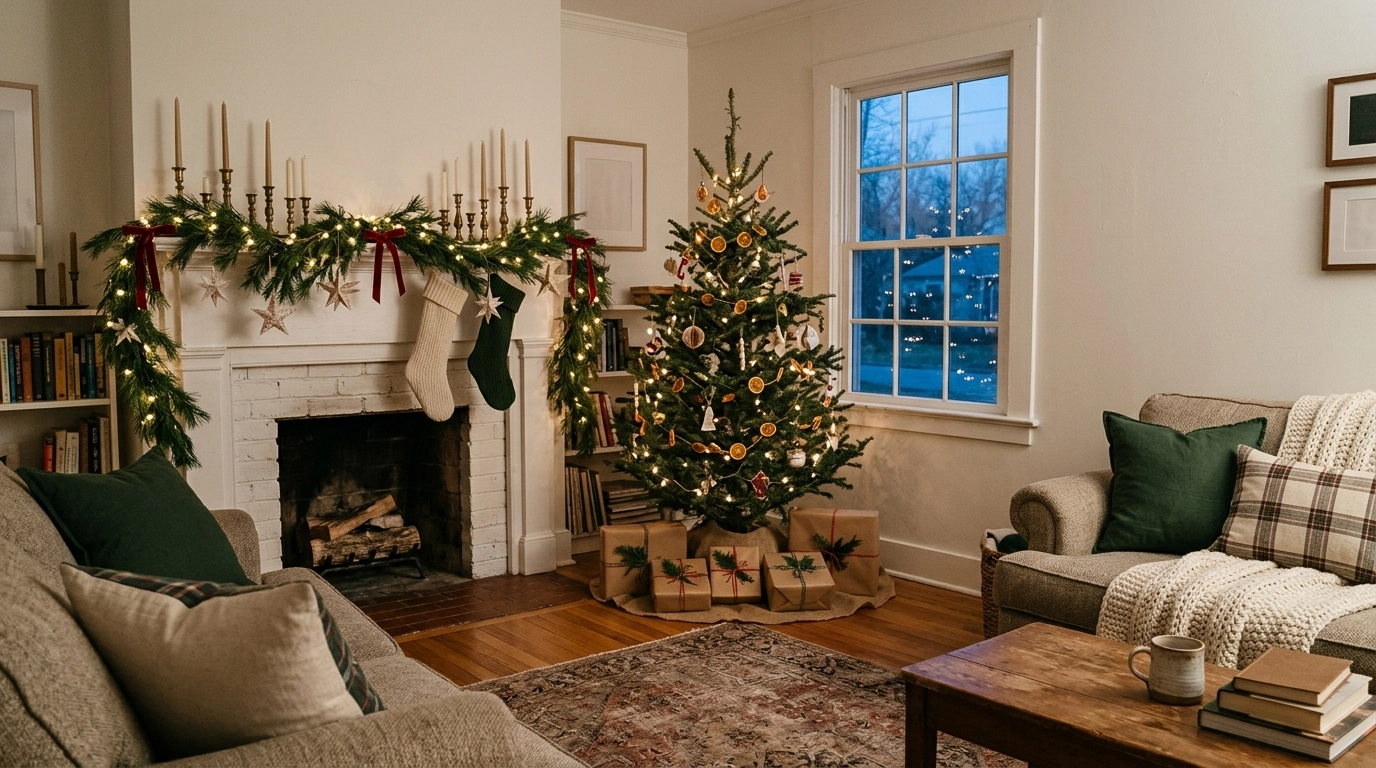
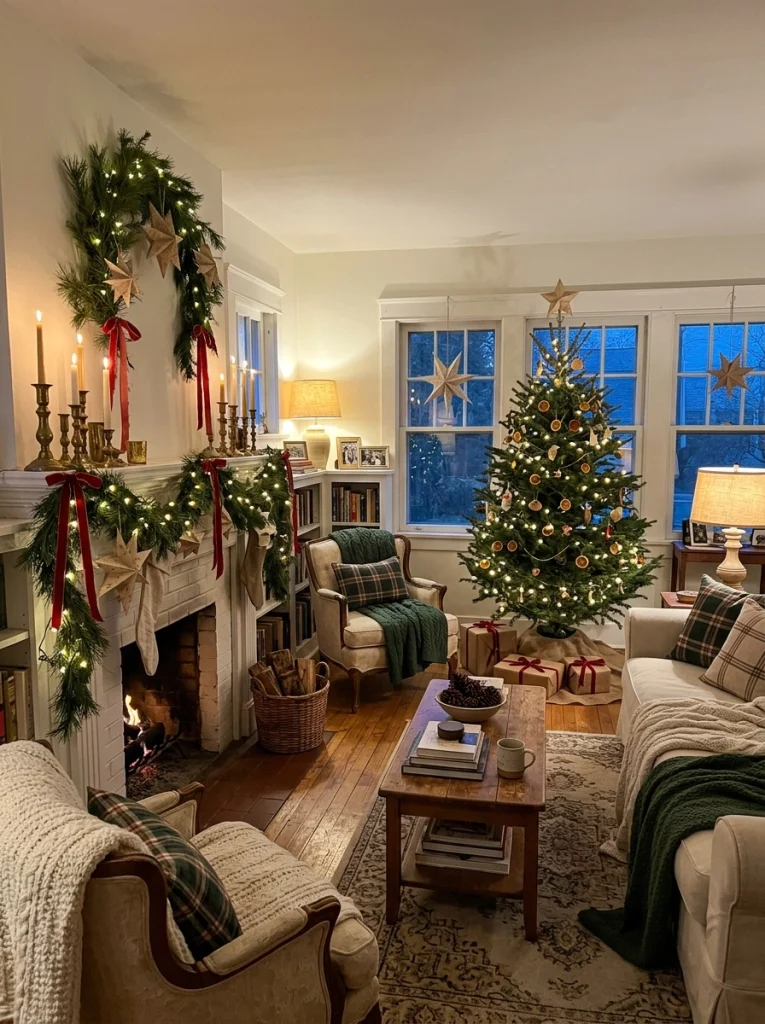
A home can feel surprisingly bare at Christmas when you’re working with a tight decorating budget. Maybe your living room has a tree but no other holiday touches, or your entryway looks forgotten while every store seems packed with expensive decorations. Buying a whole new collection isn’t the answer. A few thoughtful changes can make your existing furniture and everyday accessories feel festive.
Learning how to decorate a home for Christmas on a budget is really about choosing a color palette, reusing what you own, and adding inexpensive details in the right places. In about 3 hours for $40 to $75, you can decorate a living room, entryway, and dining table with warm lighting, simple greenery, ribbon, and homemade accents. You’ll get a coordinated holiday look without filling your closets with decorations you’ll rarely use again.
Time: Around 3 hours | Cost: Around $40–$75 | Difficulty: Easy | Best for: Living rooms, entryways, apartments, and small homes
What You’ll Need

Most of these supplies are available at Target, Walmart, Dollar Tree, IKEA, or a local thrift store. Prices vary by store and season, so use these figures as planning estimates.
- Artificial pine garland, 6 feet: around $8–$12
- Warm white LED string lights: around $5–$8
- Red velvet or plaid ribbon, 5 yards: around $4–$6
- Removable adhesive hooks, small pack: around $4–$6
- Kraft wrapping paper and twine: around $4–$6
- Battery-operated candles, 2–4 pieces: around $5–$8
- Thrifted glass jars or candleholders: around $3–$6
- Pinecones, dried orange slices, or natural branches: free to around $4
- Scissors, tape, and measuring tape: use what you have
Estimated total: $33–$56 if you buy only the basics. Allow up to $75 if you need extra lights, more greenery, or additional accessories.
1. Choose a Simple Christmas Color Palette
Before buying anything, look at the room you already have. If your sofa is beige, your curtains are white, and your furniture is natural wood, red ribbon and greenery will fit right in. For a darker room with black furniture, try forest green, warm white, and brass accents instead.
Stick to three main colors, including green or another natural shade. This keeps inexpensive decorations from looking mismatched. Pull out your existing cushions, blankets, ornaments, and table linens before visiting a store. You may already own most of what you need.
One common mistake is buying several different styles because each item looks cute on its own. A rustic wooden sign, glittery pink ornaments, and bright blue lights rarely feel coordinated together. Choose your colors first, then shop for the missing pieces.
2. Clear Surfaces Before Adding Decorations
Start with your coffee table, mantel, entryway console, and dining table. Remove everyday clutter, stacks of mail, spare chargers, and accessories that compete with your Christmas decorations. You don’t have to empty the room. Just make a little breathing room.
Set aside 10–15 minutes for this task. Keep a basket nearby for small items that belong elsewhere, and wipe each surface with a microfiber cloth before styling it. Leave useful items, such as a table lamp or a bowl for keys, in place if they help the room function.
A mistake people often make is adding Christmas decorations on top of everything they already own. That makes a small room feel crowded fast. Remove two or three ordinary accessories for every new decorative piece you introduce.
3. Decorate a Mantel or Shelf With Inexpensive Greenery
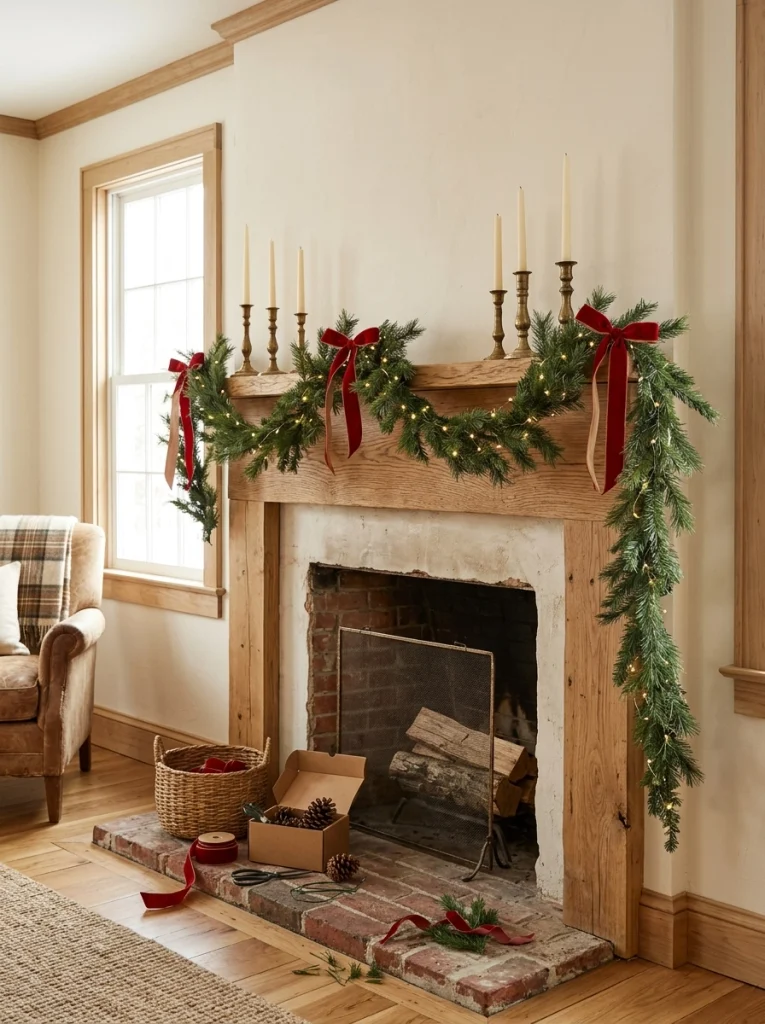
You don’t need a fireplace to use this idea. A floating shelf, bookcase, or entryway console works just as well. Measure the surface, then buy a garland that’s long enough to drape across it with a little extra at the ends. For a 5-foot mantel, a 6-foot garland usually gives you a relaxed curve without overwhelming the space.
Secure lightweight garland with removable hooks rated for the surface, following the package directions. Add small red ribbon bows every 12–18 inches, then tuck in a short strand of battery-operated lights. Place two or three candleholders at one end to create height.
Keep decorations away from open flames and hot light bulbs. Don’t attach hooks to dusty or delicate paint without checking their suitability first.
4. Make Your Christmas Tree Look Fuller Without Buying More Ornaments
If your tree looks a little sparse, resist the urge to buy another box of decorations. Begin by spreading out the branches, working from the bottom upward. On an artificial tree, gently separate each branch tip so the green spaces don’t show through as much.
Group your existing ornaments by color and size. Place larger ornaments deeper inside the tree to create depth, then distribute medium and small pieces across the outer branches. Add a few ribbon loops or handmade paper stars to fill obvious gaps.
For a 6-foot tree, try using three to five ribbon bows or several paper ornaments as inexpensive accent pieces. A small mistake to avoid is hanging every ornament at the same depth. Mix the placement so the tree looks fuller from across the room.
5. Turn Everyday Glass Jars Into Christmas Centerpieces
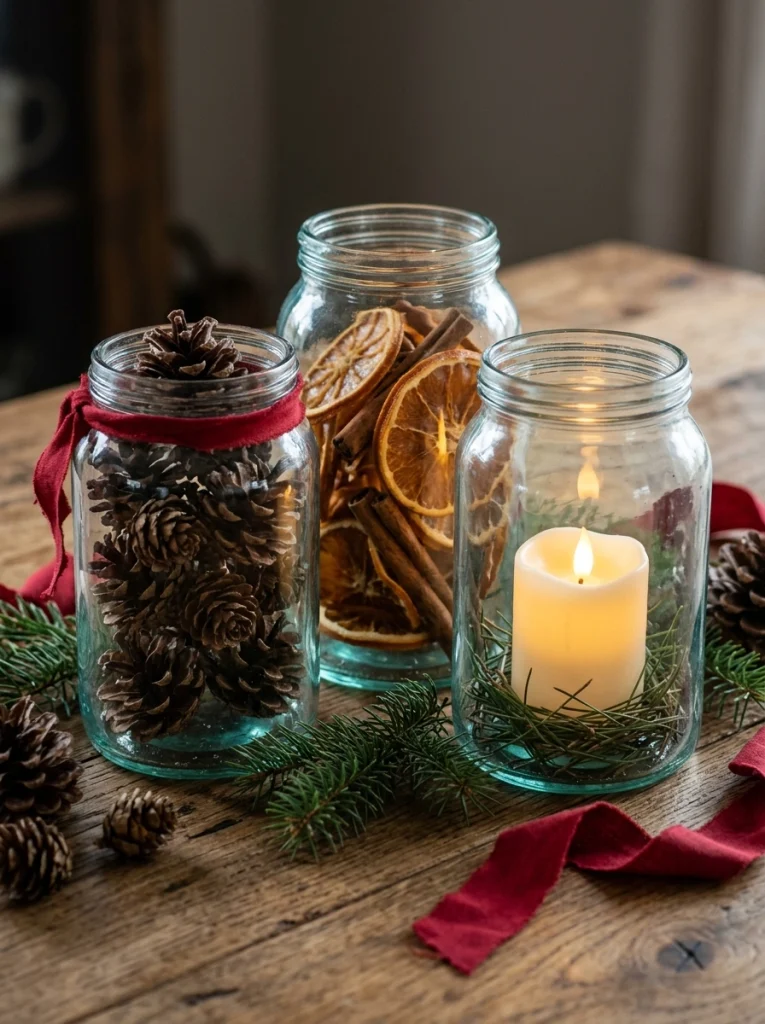
Collect three glass jars from your kitchen, remove their labels, and wash them thoroughly. Dry them completely before decorating. Fill one with pinecones, another with dried orange slices, and a third with battery-operated candles. Arrange the jars in a loose row rather than lining them up perfectly.
For a centerpiece on a standard dining table, keep the arrangement around 12–16 inches long and under 10 inches tall so guests can see one another across the table. Add two short evergreen clippings and a length of ribbon around the largest jar.
Skip loose glitter unless you enjoy finding it in your tablecloth for weeks. Also, never put a burning candle inside a jar filled with paper, dry foliage, or other flammable materials.
6. Add Warm Lighting to the Dark Corners
Christmas decorations look much more inviting when the lighting feels soft instead of harsh. Turn off the brightest overhead light and use the table lamp you already own. Wrap a short strand of warm white LEDs around a bookshelf, drape them along a mantel, or place battery-powered lights inside a clear lantern.
Choose warm white lights around 2,700–3,000K when the packaging lists a color temperature. They work especially well with wood, cream fabrics, red accents, and greenery.
Check the light strand for damaged wires before plugging it in, and follow the manufacturer’s instructions for indoor or outdoor use. Avoid pinching cords behind furniture or running them beneath rugs. A small mistake is adding lights to every surface. Two or three well-lit areas usually look more polished than a room covered in glowing decorations.
7. Style the Entryway With One Festive Focal Point
Your front entrance doesn’t need a complete makeover. A small wreath, a ribbon-tied basket, or a bowl of ornaments on the console is enough to signal that Christmas has arrived. Choose one main decoration, then add one or two smaller details around it.
For a basic wreath, attach a 2-inch-wide ribbon to the back of an existing wreath and hang it with a door-safe hook rated for its weight. If you rent, check your lease and the door material before using adhesive products. A tabletop wreath is another easy option if you can’t hang anything.
Keep the floor clear around the doorway, especially if you have a narrow entry. A cluster of oversized gift boxes may look lovely in a photograph but quickly becomes an obstacle when everyone comes home carrying bags and coats.
For more seasonal inspiration, see [INTERNAL LINK: article about budget-friendly Christmas porch decorating ideas].
8. Wrap Gifts to Match Your Decorations
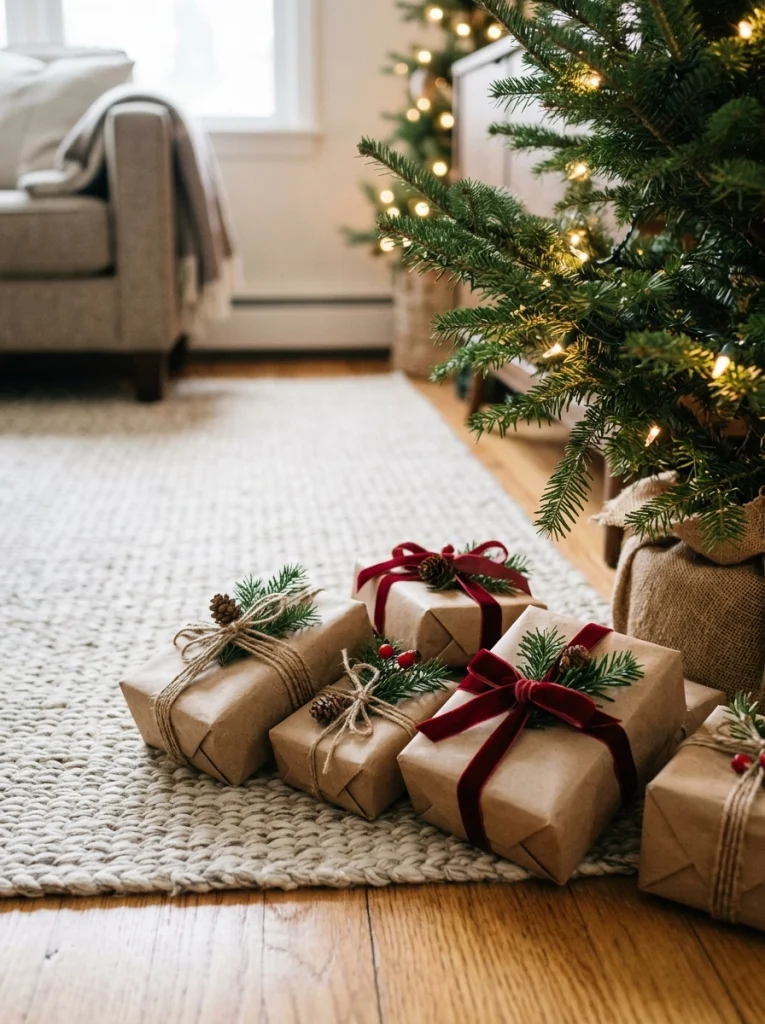
Gift wrapping can double as decoration, especially when your tree sits in a living room with limited space. Use inexpensive kraft paper for most packages, then add red ribbon or twine for contrast. Save attractive paper bags, fabric scraps, and ribbon from previous gifts instead of buying a new roll for every color scheme.
Wrap three to five empty boxes in different sizes if you want a styled display before you’ve finished shopping. Keep the boxes toward the back or side of the tree so they don’t interfere with walking paths.
For a polished finish, tuck a small evergreen clipping beneath the twine. Don’t use fresh foliage on gifts that will sit near a heater or fireplace, and keep decorative sprigs away from pets that may chew them.
Mistakes That Ruin the Result
- Buying decorations before choosing colors: Pick three main shades and shop your home before heading to the store.
- Decorating every available surface: Leave some tabletops and shelves clear so your favorite pieces stand out.
- Using lights that clash with the room: Choose warm white LEDs for a softer, more consistent glow.
- Ignoring scale: Measure mantels, shelves, and entryway consoles before buying garlands, wreaths, or large ornaments.
Frequently Asked Questions
Q: How to decorate a home for Christmas on a budget of $50?
Start with decorations you already own, then spend your $50 on greenery, warm white lights, ribbon, and a few inexpensive candles. Focus on three areas, such as the living room, entryway, and dining table, instead of trying to decorate every room.
Q: What is the cheapest way to decorate a house for Christmas?
Reuse ornaments, wrap empty boxes in kraft paper, gather pinecones, and make centerpieces from recycled jars. Free branches from your own yard can also work, provided you have permission to collect them and check that they’re safe for indoor use.
Q: How can I make my home look expensive at Christmas without spending much?
Repeat the same colors throughout the room, use warm lighting, and group decorations in small arrangements rather than scattering them everywhere. A simple green garland with matching ribbon often looks more polished than a shelf full of unrelated accessories.
Q: Which rooms should I decorate first for Christmas?
Start with the living room because it’s usually where the tree and holiday gatherings happen. Add a small arrangement to the entryway and a centerpiece to the dining table if you have time and supplies left.
Q: How can I decorate a small apartment for Christmas without clutter?
Choose a tabletop tree or slim artificial tree, decorate one shelf with greenery, and use vertical space for lights or a small wreath. Keep walkways clear and choose decorations that can be stored in one compact box after the holidays.
Q: When should I start decorating my home for Christmas on a budget?
Starting in November gives you time to reuse decorations, compare prices, and shop sales instead of making rushed purchases. If you’re decorating later, focus on greenery, lighting, and ribbon because these three elements can change the feel of a room quickly.
Give Your Home a Cozy Christmas Feel This Weekend
You don’t have to spend hundreds of dollars to make your home feel ready for the holidays. Start with the decorations you own, choose a simple color palette, and spend your money on a few useful pieces that work in more than one room. In an afternoon, you can style your mantel, brighten a dark corner, make a handmade centerpiece, and give your entryway a festive touch. Learning how to decorate a home for Christmas on a budget is easier when you work with what you have. Set aside a few hours this weekend, put on your favorite holiday playlist, and make your home feel special one small area at a time.