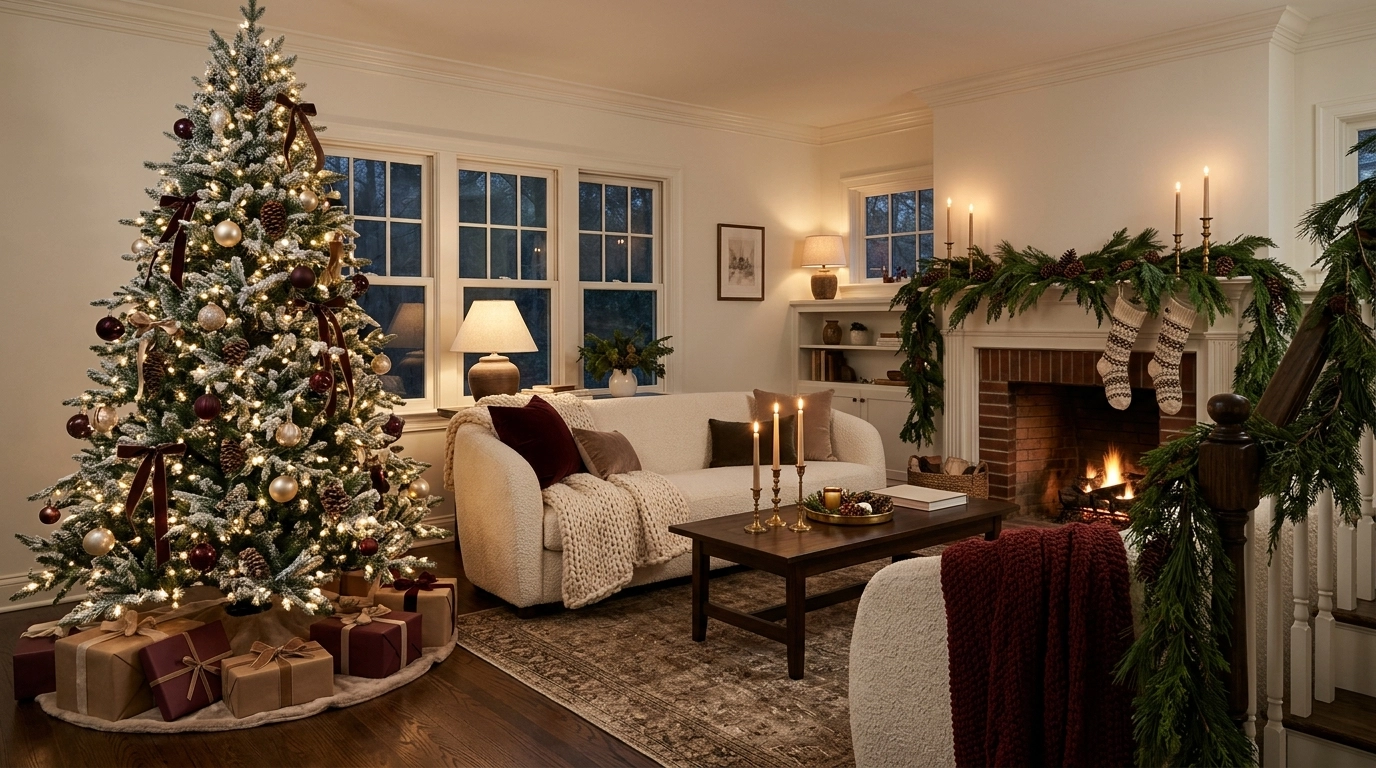
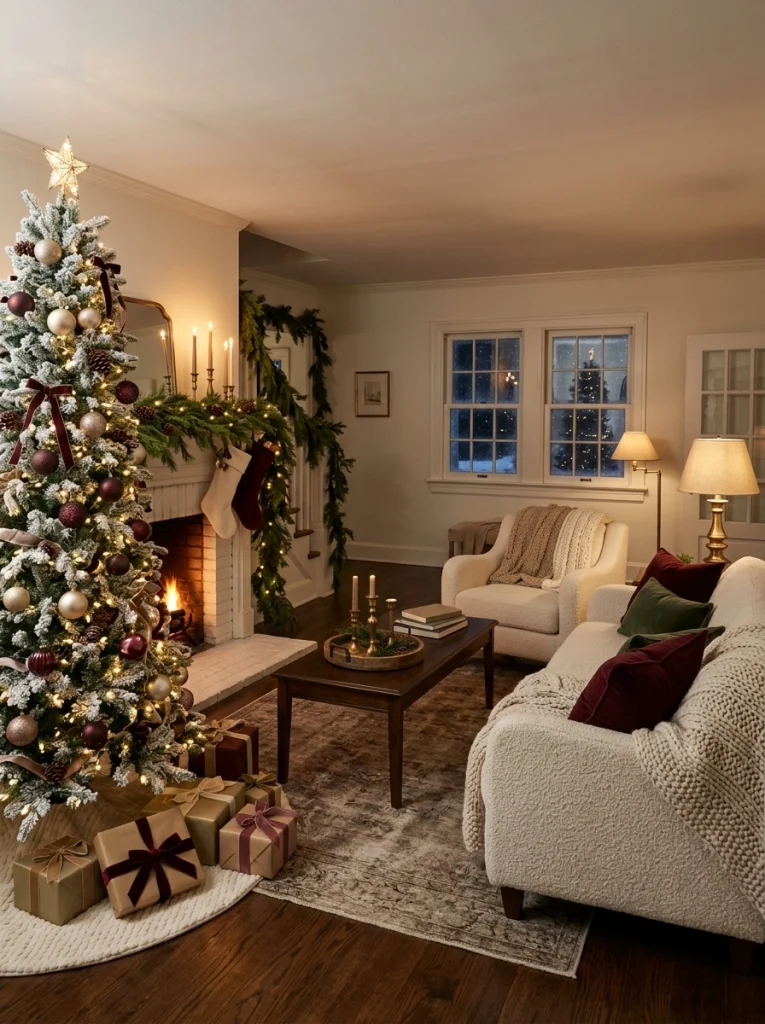
Christmas decorating always sounds simple until you start moving things around the living room. The coffee table gets crowded, the tree takes up half the floor, and suddenly your favorite reading corner has disappeared. I’ve found that the prettiest holiday rooms aren’t necessarily the ones with the most decorations. They’re the ones where every piece has a purpose.
The best Christmas living room decor ideas combine warm lighting, seasonal greenery, comfortable fabrics, and a few meaningful holiday accents. You can create a cozy, polished room with a budget of $30 to $150, depending on what you already own. From traditional red-and-green styling to soft neutral palettes, these ideas work for apartments, family rooms, and spacious homes alike.
1. Give Your Living Room a Classic Christmas Tree Glow
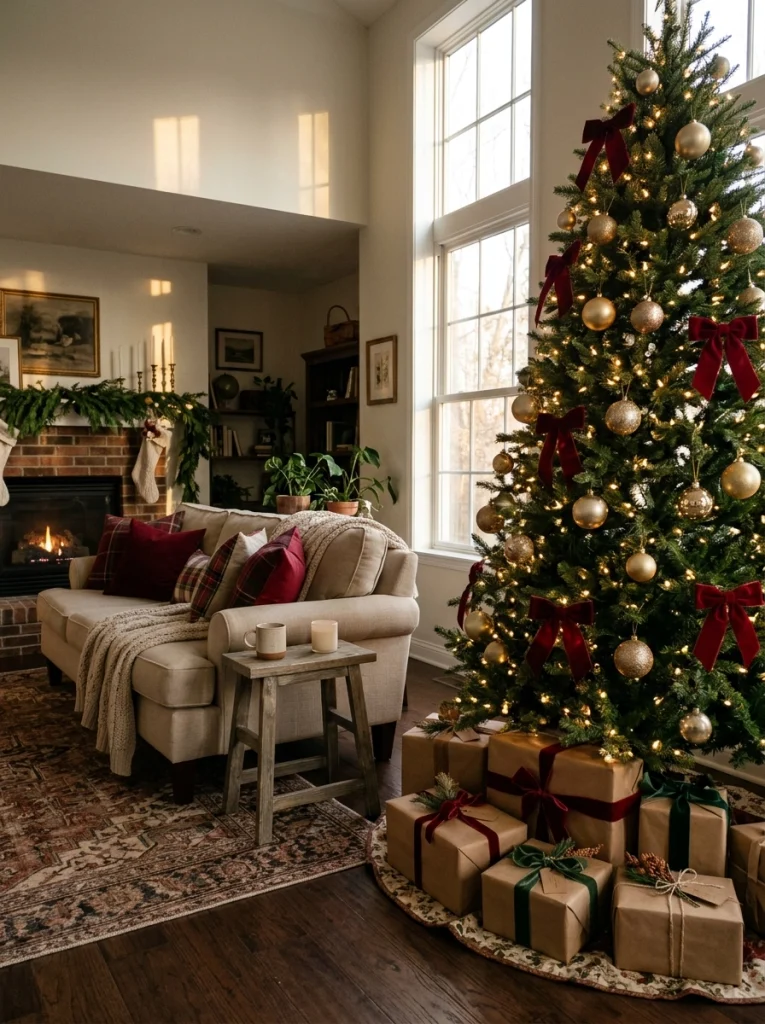
A Christmas tree often becomes the main attraction, so start there before decorating every shelf and tabletop. For a traditional look, choose a 6.5- to 7.5-foot tree for rooms with standard 8-foot ceilings, leaving enough clearance for the topper. Decorate with red, gold, and deep green ornaments, then fill the branches with warm white lights. A pre-lit artificial tree from Walmart or Target generally costs around $80 to $200, while a smaller tabletop version can cost $25 to $50. If you already own a tree, spend your money on a coordinated ornament set instead. Keep the lower branches relatively simple if you have pets or toddlers, and place a tree skirt or woven basket around the base to hide the stand. Kraft-paper presents tied with cotton string finish the display without competing with the decorations. The result feels familiar and festive, even if the rest of your room stays fairly simple.
2. Layer Cream and Beige for a Soft Neutral Christmas
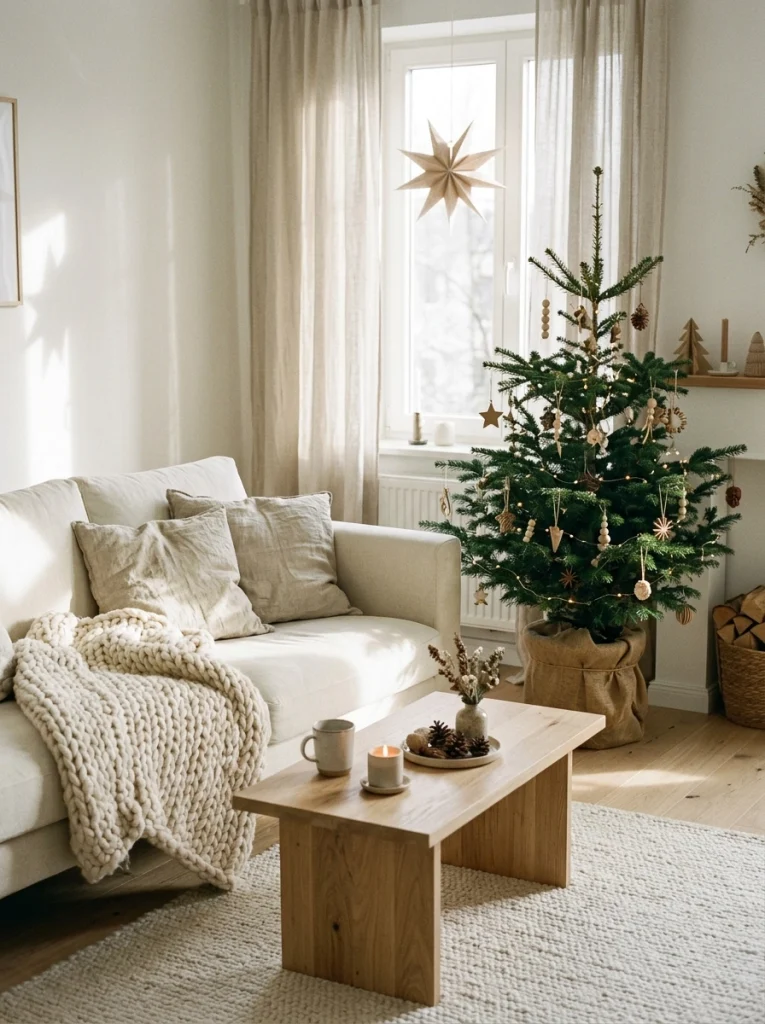
You don’t have to use bright red to make a living room feel festive. Cream, beige, warm white, and natural wood create a quieter holiday look that works beautifully with existing furniture. Swap two everyday cushion covers for ivory boucle or cable-knit covers, usually around $12 to $25 each at IKEA or Target. Add a chunky knit throw over one sofa arm and place a small pine arrangement in a ceramic vase on the coffee table. Wooden stars, paper ornaments, and brushed brass accents bring in the Christmas feeling without making the room look busy. If your sofa is already beige, keep the cushions a shade lighter or darker so they don’t disappear into the upholstery. Wash removable covers according to their care labels before storing them after the holidays. This palette also works well in small apartments because the lighter textiles keep the room visually open while the natural greenery adds enough contrast.
3. Hang a Garland Across the Fireplace Mantel
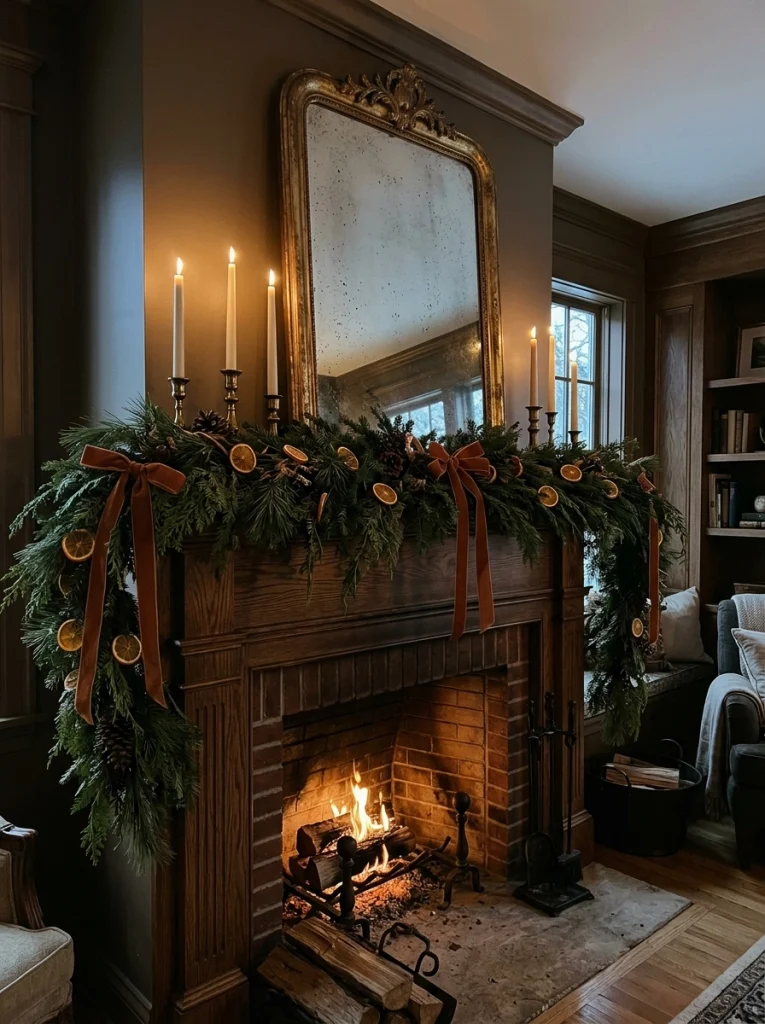
A fireplace mantel is a natural spot for holiday greenery because it creates a focal point without taking up floor space. Drape a 6-foot artificial pine garland costing around $20 to $45 across the mantel, allowing the ends to hang slightly lower than the center. Add a few pinecones, velvet bows, or dried orange slices attached with thin floral wire. For a balanced arrangement, place two candleholders at one end and a framed print or small decorative tree at the other. Keep the tallest items away from the center if you have a large mirror above the fireplace. If you use a real fireplace, follow the manufacturer’s clearance instructions and keep flammable greenery, ribbons, and dried fruit well away from heat and sparks. Battery-operated candles provide a safer decorative glow. No fireplace? Attach the garland to a console table or floating shelf instead, and use a string of warm micro-lights to make the greenery stand out after sunset.
4. Make the Coffee Table Feel Like a Tiny Christmas Scene
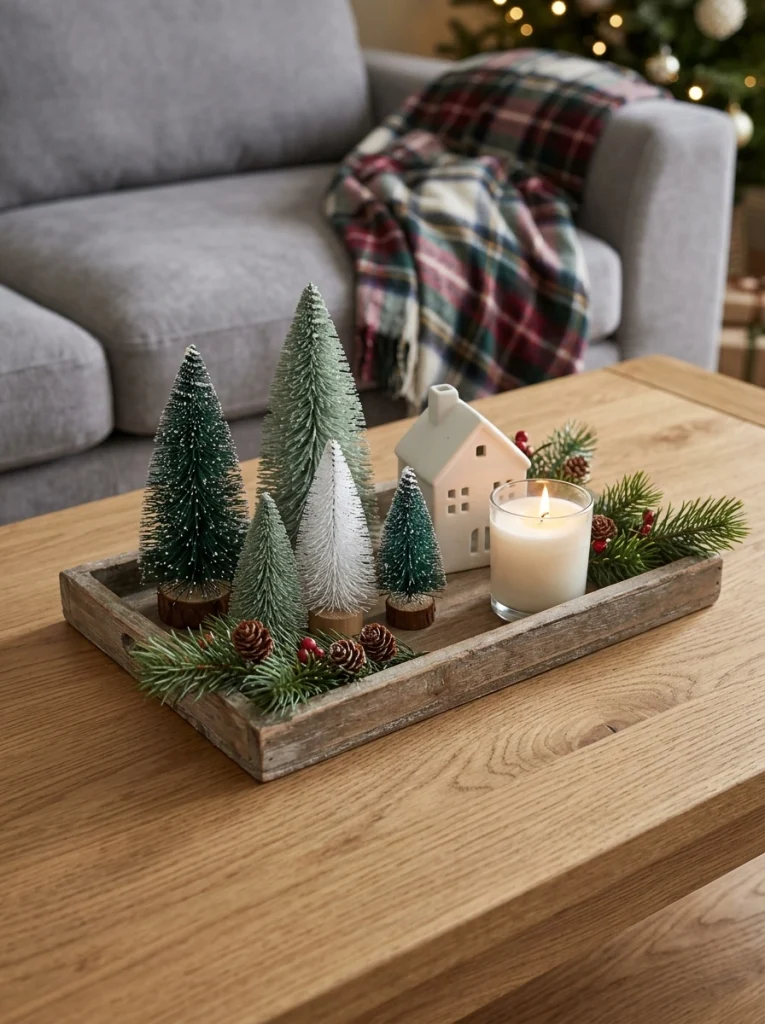
Coffee tables can become cluttered quickly during the holidays, especially when everyone is using the living room. Instead of scattering decorations across the entire surface, arrange them on a 12- to 16-inch tray costing about $15 to $30. Add two miniature bottlebrush trees, a small ceramic house, and a flameless candle. Vary the heights so the display looks collected rather than flat, but keep everything low enough to see over while chatting on the sofa. A wooden tray suits rustic interiors, while a black metal tray works with modern furniture. Check thrift stores for inexpensive trays and use a little paint to change the finish if needed. Leave at least half the coffee table empty for mugs, snacks, and board games. If you have young children, skip tiny detachable ornaments and choose sturdy wooden pieces instead. The arrangement takes only a few minutes to assemble, and everything can be lifted away together when you need the full tabletop.
5. Add Christmas Pillow Covers in Rich Seasonal Colors
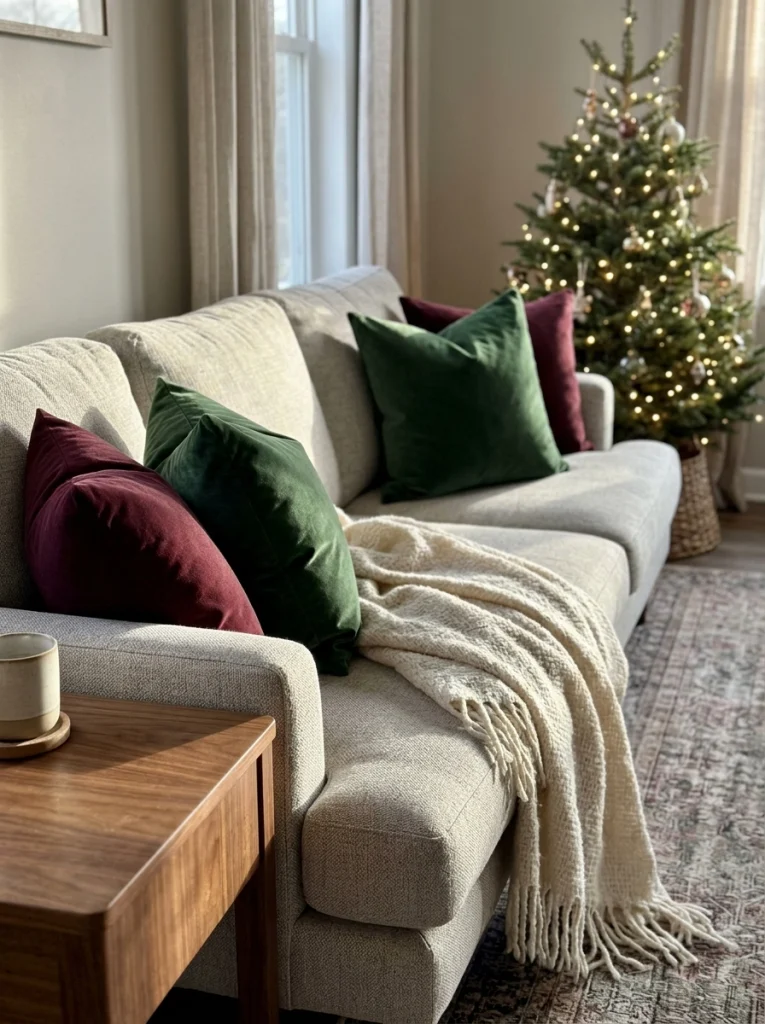
Changing pillow covers is one of the quickest ways to give a familiar sofa a holiday makeover. Choose three or four covers in 18- to 22-inch sizes for a standard three-seat sofa, mixing one velvet, one subtle plaid, and one solid neutral. Walmart and IKEA often carry affordable options in the $8 to $20 range per cover, while seasonal designs at Target can cost a little more. Keep the inserts you already own and replace only the covers to save money and storage space. For a traditional room, try burgundy and forest green with cream. If your furniture is gray, pine green and ivory create a softer contrast. Avoid buying a different Christmas print for every cushion, as too many competing patterns can make the sofa look untidy. Check washing instructions before purchasing, particularly with velvet or embroidered designs. Fold the everyday covers into a labeled storage bag so they’re ready to go back on the sofa in January.
6. Style the Windows With Simple Evergreen Swags
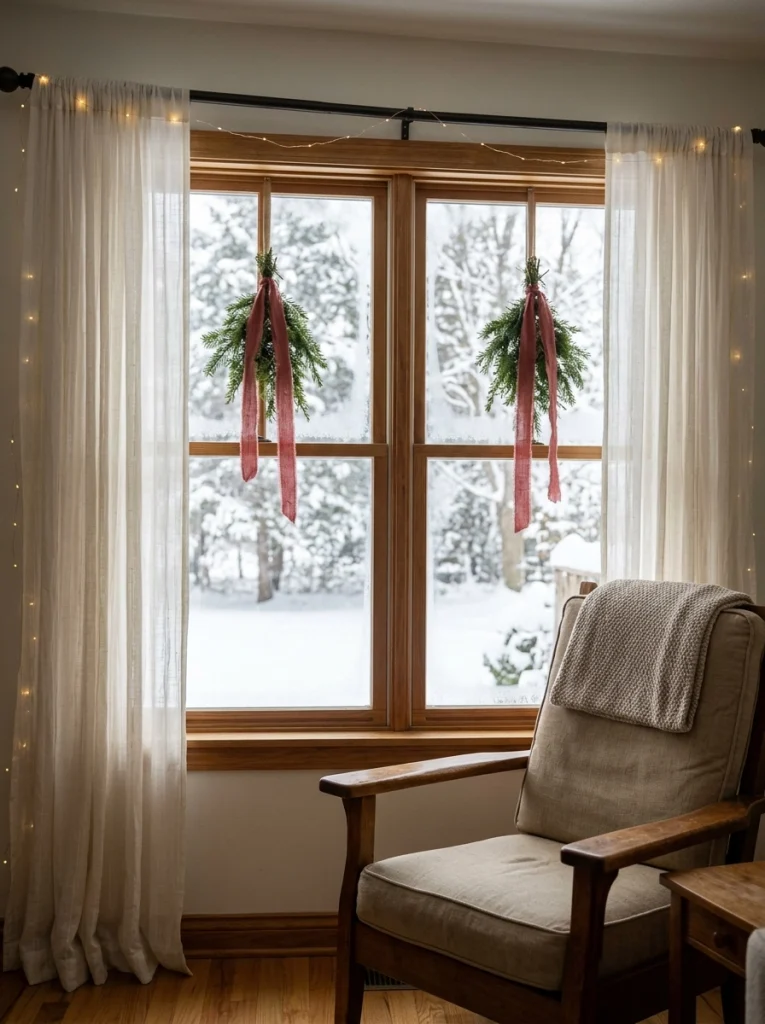
Windows deserve a little holiday attention, especially if they’re visible from the street. Tie small evergreen bundles with 1.5- to 2-inch-wide ribbon and hang one near each upper corner of the window frame. Artificial swags cost around $10 to $25 each at craft stores or online, while fresh greenery from a local Christmas tree stand may cost less if you make the bundles yourself. Secure them with removable hooks rated for the surface and weight. Add a thin strand of battery-operated fairy lights if you want a gentle glow in the evening. Keep the center of the window clear so daylight still reaches the room. For rented homes, avoid nails and staples that leave marks on the trim. If you’re using fresh branches, check them weekly and replace any that become brittle or drop excessive needles. This simple treatment works especially well when the rest of your window area is kept uncluttered.
7. Create a Cozy Christmas Reading Nook
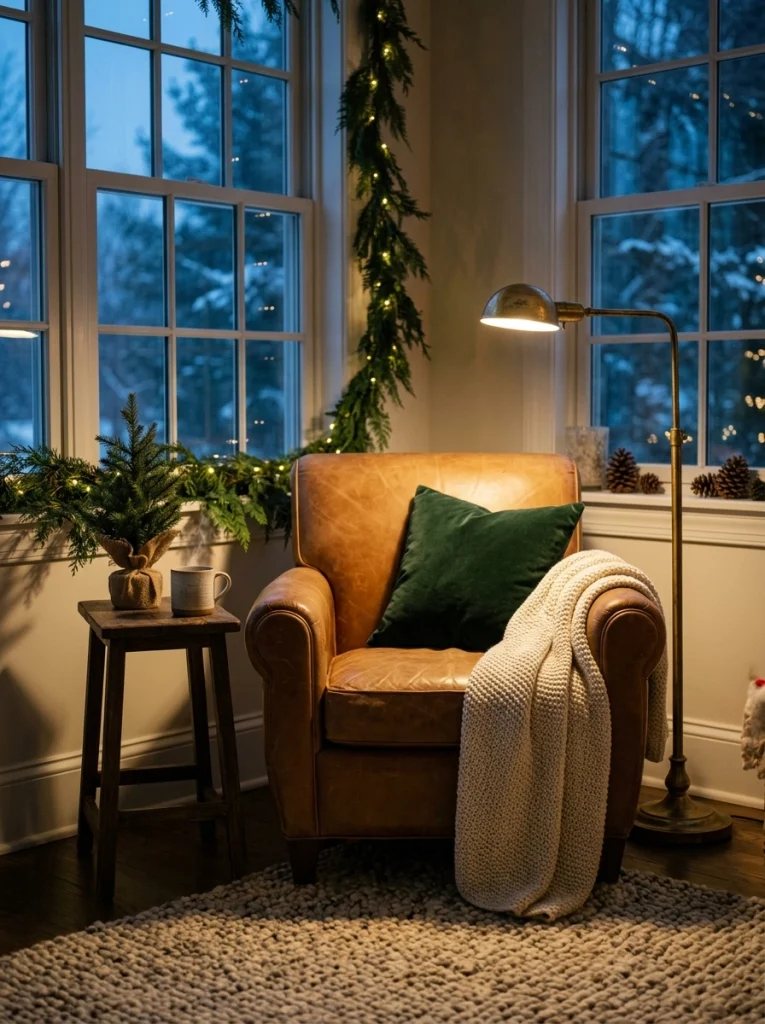
An unused corner can become one of the nicest places in your living room during December. Start with a comfortable chair, a small side table, and a lamp that gives off warm rather than harsh white light. A $25 to $50 floor lamp from IKEA or Walmart can change the atmosphere without requiring new furniture. Drape a wool-look throw over the chair, add one seasonal cushion, and place a miniature Christmas tree or a small evergreen arrangement on the table. If you have hardwood floors, tuck a 2-by-3-foot rug beneath the front legs of the chair to define the area. Keep a clear walking path between the nook and the rest of the room. A basket for books and blankets keeps the corner tidy after use. For a finishing touch, add a small stack of holiday novels or a favorite cookbook. It feels personal, practical, and inviting without requiring an entire room makeover.
8. Bring in Rustic Wood and Pinecone Accents
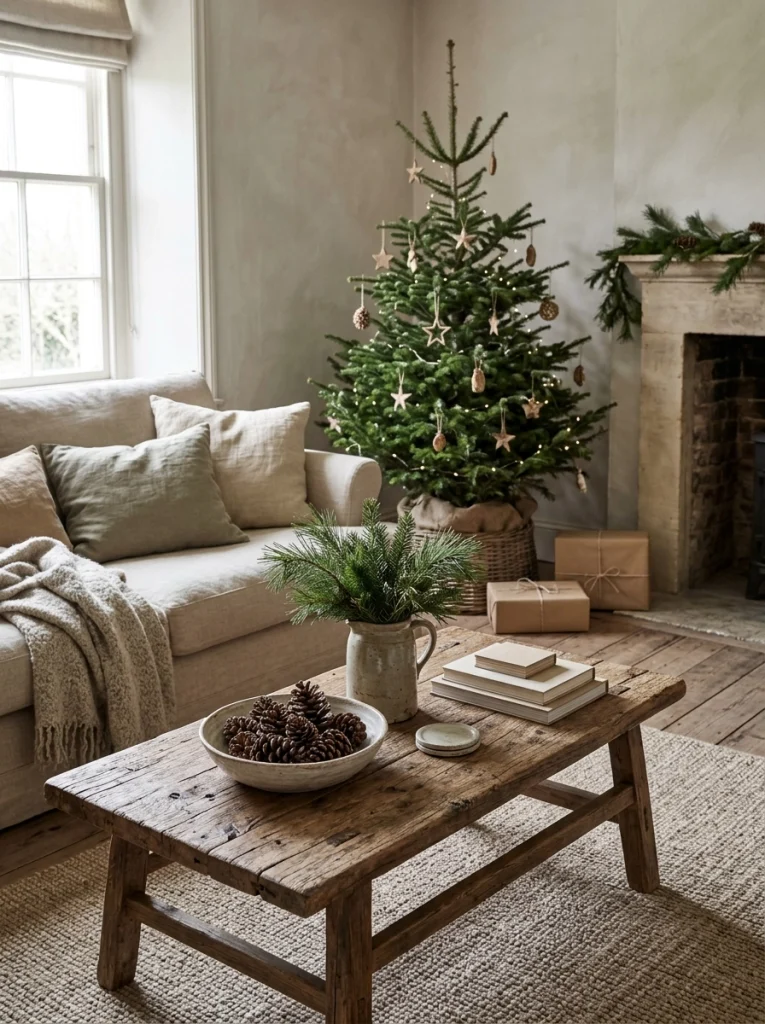
Rustic Christmas decorating works particularly well in homes with wood floors, leather seating, or farmhouse-style furniture. You can start with materials that cost very little. Collect clean pinecones, purchase a $10 to $20 wooden bowl from a thrift store, and arrange the cones with a few evergreen clippings. Add a reclaimed wood candleholder or a small wooden star on a nearby shelf. Keep the colors earthy, including brown, cream, muted green, and a touch of copper. If you collect pinecones outdoors, inspect them carefully and clean them before bringing them inside. Avoid placing natural materials near open flames. A wood-bead garland draped over a bookshelf or mantel continues the theme without adding another large decoration. For extra texture, use a chunky woven basket beside the sofa to store blankets. The secret is to combine a few natural materials with comfortable fabrics rather than filling every surface with rustic signs and miniature wooden decorations.
9. Hang Stockings Even Without a Fireplace
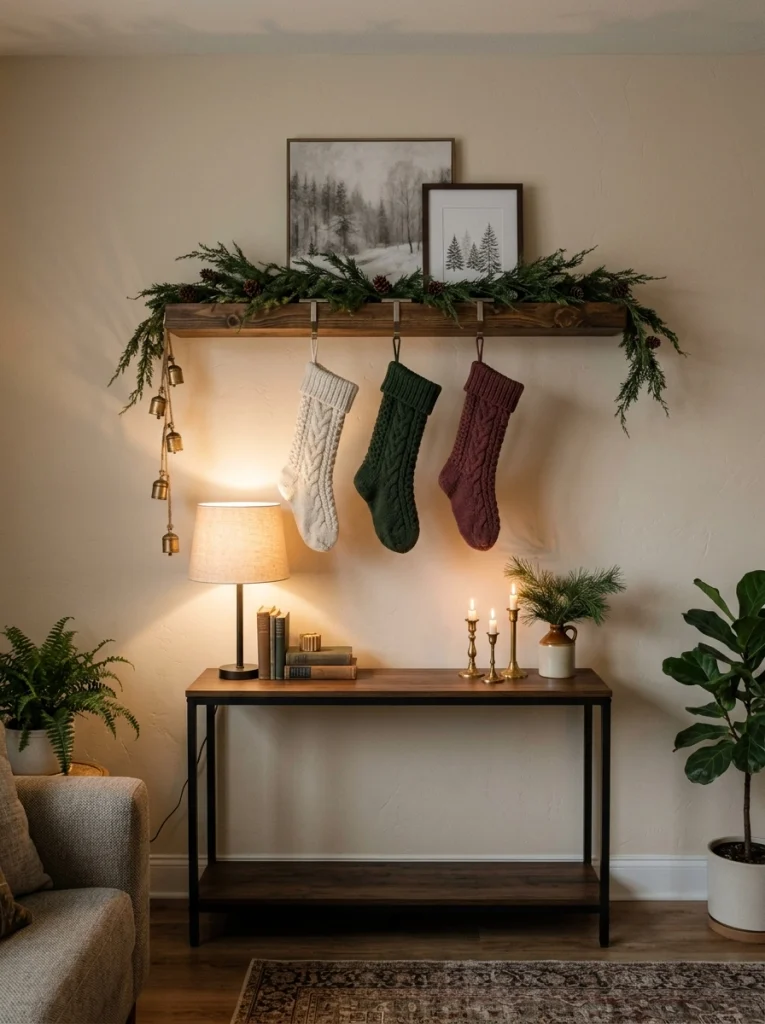
Stockings don’t have to hang from a mantel. A floating shelf, sturdy console table, or dedicated wall rail works just as well in a home without a fireplace. Choose one stocking per household member, preferably in a coordinated material such as knit, felt, or linen. Affordable stockings at Target or Walmart often cost around $8 to $18 each. Use stocking holders only on shelves designed to support their weight, and keep the stockings away from heaters, candles, and open flames. A narrow garland above the display adds greenery, while a few small framed prints fill the empty wall space. If you rent, a freestanding console table avoids drilling holes into the wall. You can also hang lightweight stockings from removable hooks after checking the weight limit. Leave enough space between each stocking so the display doesn’t look cramped. For a polished finish, repeat the same ribbon color across the stockings and garland.
10. Decorate the Bookshelves With Miniature Holiday Details
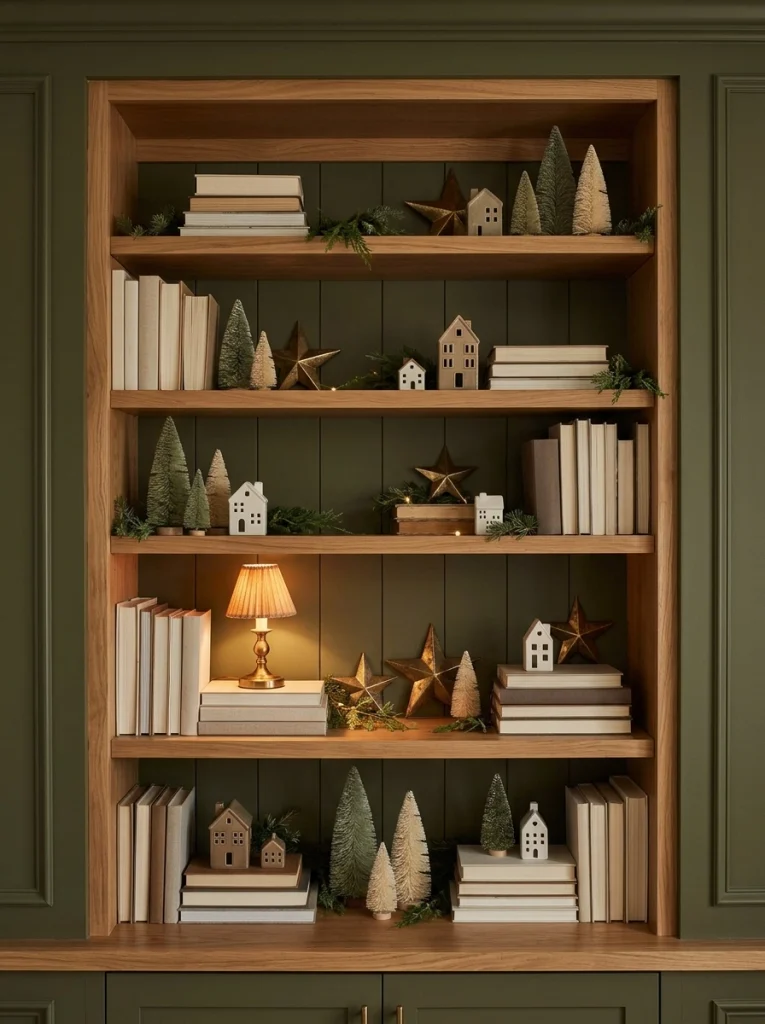
Bookshelves already have plenty of visual detail, so holiday decorating works best when you remove a few objects before adding anything seasonal. Clear one section on each shelf and replace the items with two or three small decorations per section, such as a ceramic house, a bottlebrush tree, or a brass star. Miniature trees cost around $3 to $8 each at discount stores, and thrifted ceramic pieces often cost less than $10. Stack books horizontally in one or two spots to create a base for smaller ornaments. Vary the tree heights and leave empty space between groups so the shelves remain easy to scan. If your shelves hold mostly colorful books, use white and green decorations to keep the display calm. For a room with neutral books, burgundy ornaments add a little warmth. Avoid draping thick garlands across every shelf, as they hide book spines and make the furniture harder to use. For more styling inspiration, see [INTERNAL LINK: article about living room shelf decor ideas].
11. Use Warm Fairy Lights Instead of More Ornaments
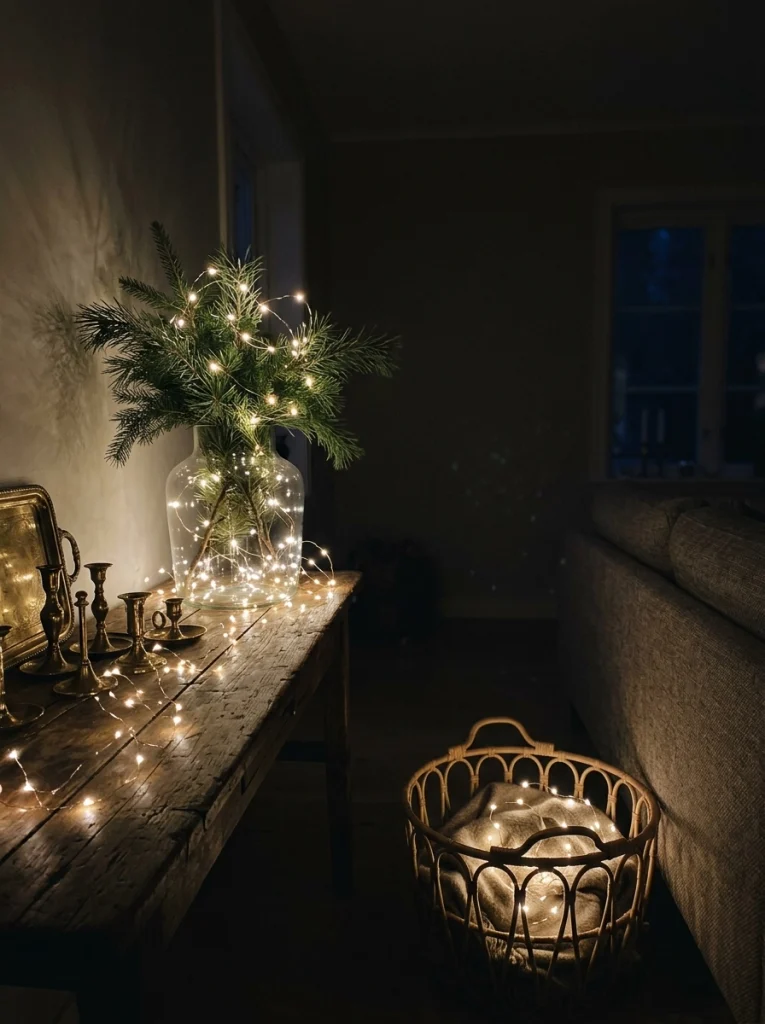
Sometimes a room looks festive enough in daylight but feels flat after dinner. Add lighting before buying another set of decorations. A 20- to 33-foot warm white LED string light set costing about $8 to $18 is usually enough for a console table, window frame, or small garland. Choose warm white rather than cool blue-white bulbs for a softer appearance. Weave the lights through greenery or arrange them loosely inside a clear glass vase with artificial branches. Keep the wire away from areas where people walk, and follow the manufacturer’s instructions about indoor use and battery replacement. If you already have lamps, switch to warm bulbs around 2700K for a more consistent glow. Turn off decorative lights when you leave home or go to bed unless the product is specifically designed for unattended operation. Several small light sources create more depth than a single bright ceiling light, making the room feel comfortable without adding visual clutter.
12. Style a Christmas Tray With Candles and Greenery
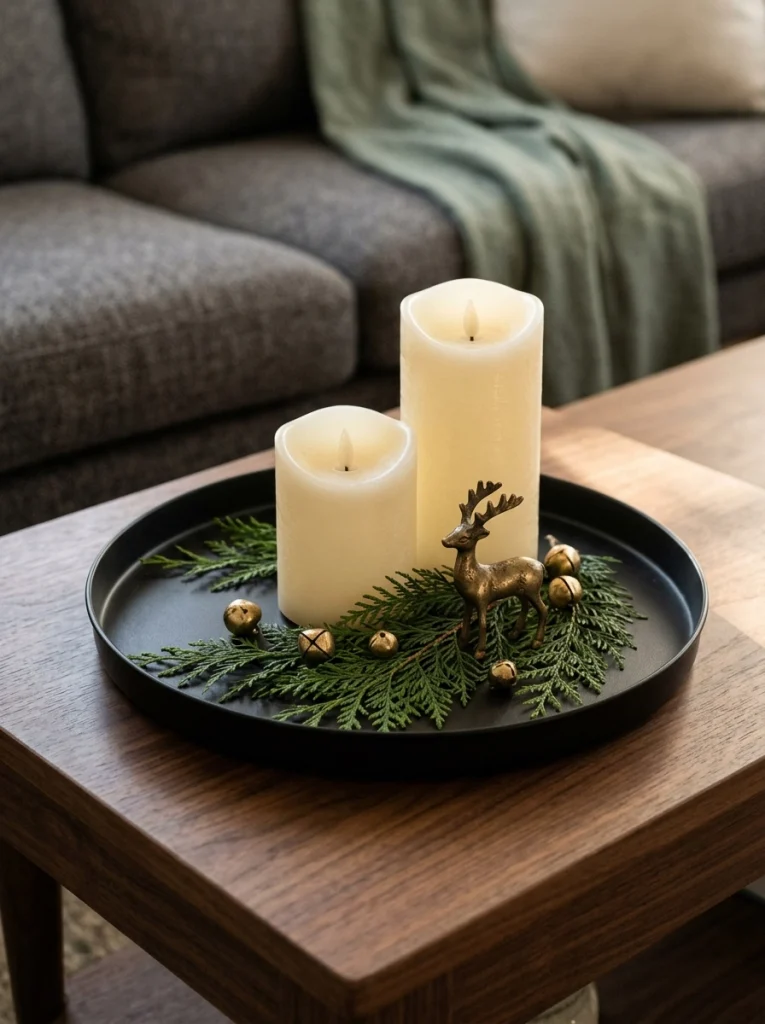
Side tables are perfect for a small seasonal arrangement because they already serve as natural stopping points around the room. Use a 10- to 14-inch tray priced around $12 to $25 and build a display with one taller candle, one shorter candle, a few cedar sprigs, and a single metallic accent. Flameless pillar candles are a practical choice near curtains or blankets, and many have timers for automatic evening lighting. For a more traditional look, choose antique brass or brushed gold accessories. Black metal and dark green work nicely in contemporary rooms. Keep the tray away from the edge of the table so it doesn’t get knocked over when someone reaches for a drink. Don’t overcrowd it with several figurines, pinecones, ribbons, and ornaments all at once. A small arrangement looks intentional because each object has enough room around it. When January arrives, remove the greenery and reuse the tray for everyday candles or a small vase.
13. Dress the Sofa With a Traditional Christmas Blanket
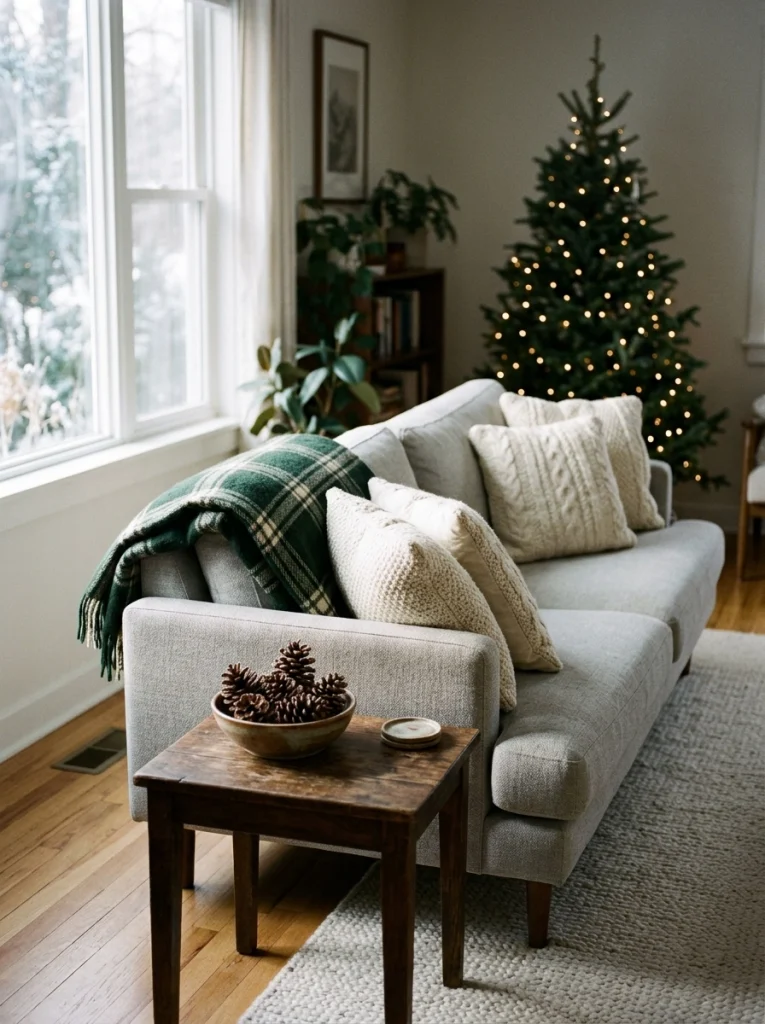
A plaid throw adds color and warmth without taking up another inch of floor space. Look for a 50-by-60-inch blanket priced around $20 to $40 at Target, IKEA, or Walmart. Red-and-green tartan feels traditional, while charcoal and cream plaid suit a modern farmhouse room. Fold the blanket into thirds and drape it over the sofa arm, or lay it across the seat when you’re expecting guests. Pair it with two solid cushions rather than several additional patterns. If you have pets, choose a tightly woven throw that doesn’t catch claws easily and can go into the washing machine. Keep a second blanket in a basket near the sofa if your family uses the living room every evening. This is a practical decoration, not just a seasonal prop. The texture softens leather or smooth upholstery, and the plaid introduces a recognizable Christmas pattern without needing more wall decorations or ornaments.
14. Add a Small Christmas Village to a Console Table
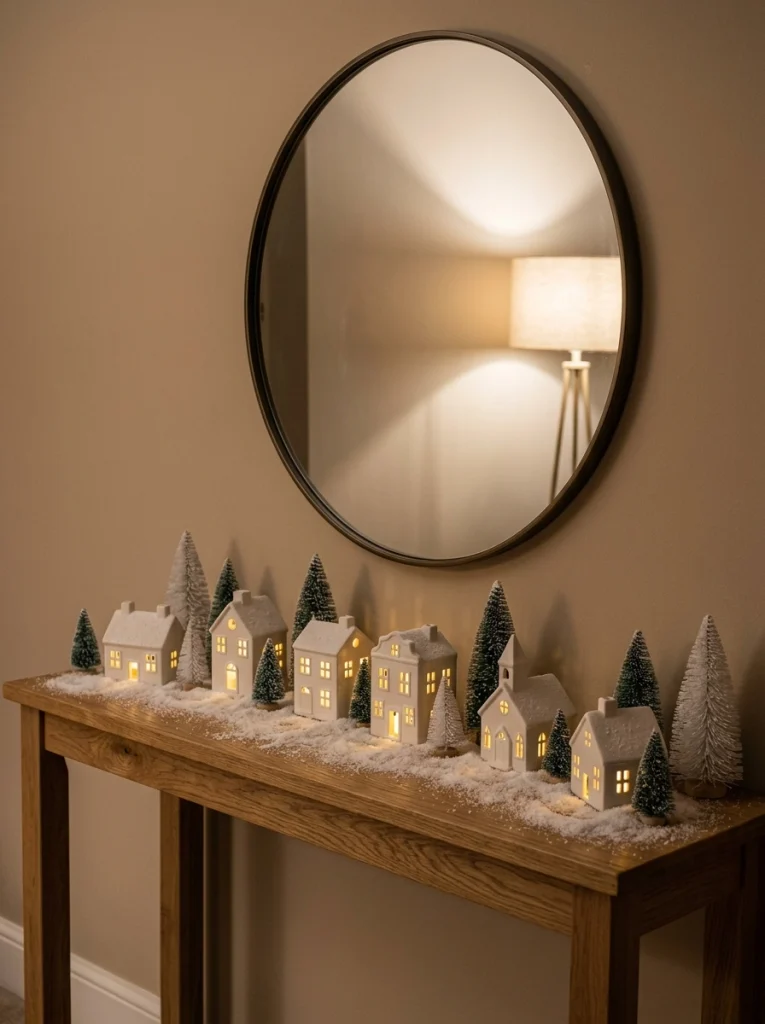
A miniature Christmas village creates a charming display without requiring a large tree or elaborate mantel. Use a 36- to 48-inch console table if you have one, or dedicate one end of a wide bookshelf to the village. Basic ceramic houses cost around $8 to $20 each, while a smaller starter collection from a discount store may cost $20 to $40. Arrange the tallest houses toward the back and place tiny bottlebrush trees between them to create a little depth. A thin layer of faux snow adds contrast against a dark wooden surface, but keep it away from pets and small children who might swallow loose pieces. Battery-operated lights inside the houses provide a soft glow after sunset. Leave some open tabletop around the display rather than filling the entire console. When the holidays are over, wrap each piece in tissue paper and store it in a divided box so delicate roofs and chimneys don’t chip.
15. Try a Black, White, and Gold Christmas Color Scheme
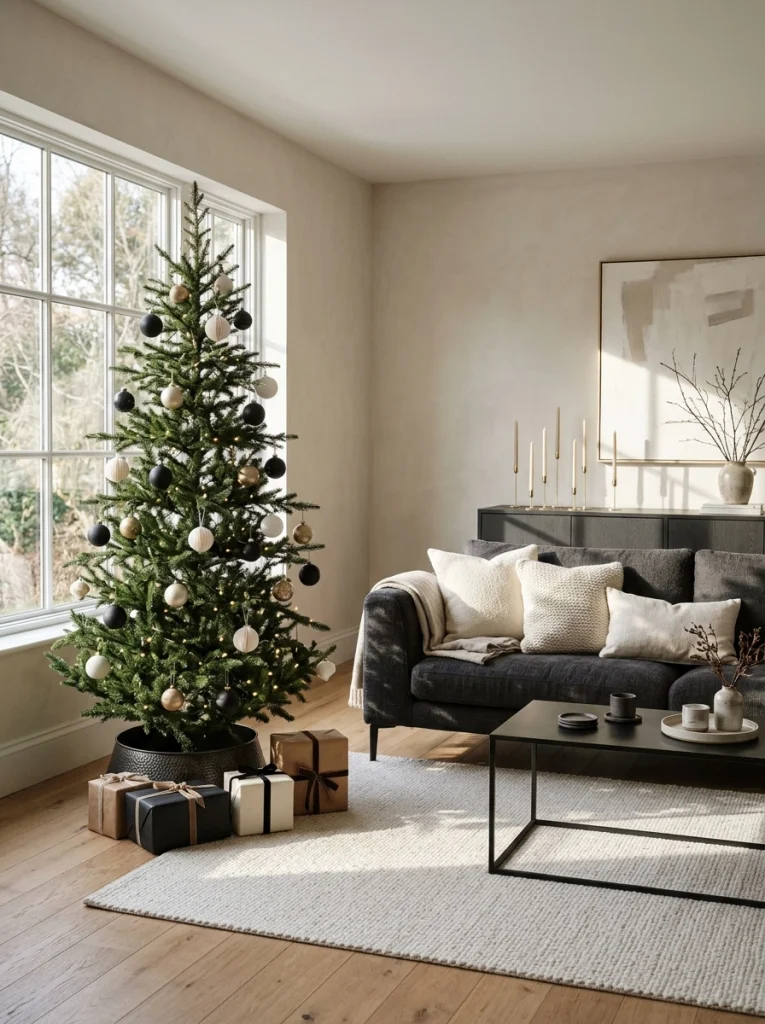
If your home already has black furniture or metal accents, a black-and-gold Christmas palette can feel cohesive instead of overly traditional. Start with 12 to 20 ornaments in black, ivory, and brushed gold, a set that often costs around $15 to $30 at Target or Amazon. Spread the colors throughout the tree rather than placing all the gold ornaments together. Add ivory cushion covers and one black decorative bowl to connect the tree with the rest of the room. Keep the greenery natural-looking so the dark accents don’t make the space feel cold. Matte finishes work particularly well because they don’t compete with the glow of the tree lights. For a smaller living room, choose a slim tree about 24 to 30 inches wide. Store fragile ornaments in individual compartments after Christmas to prevent scratches. This color scheme also works with white walls, gray sofas, and light wood floors.
16. Make a Festive Basket for Blankets and Pillows
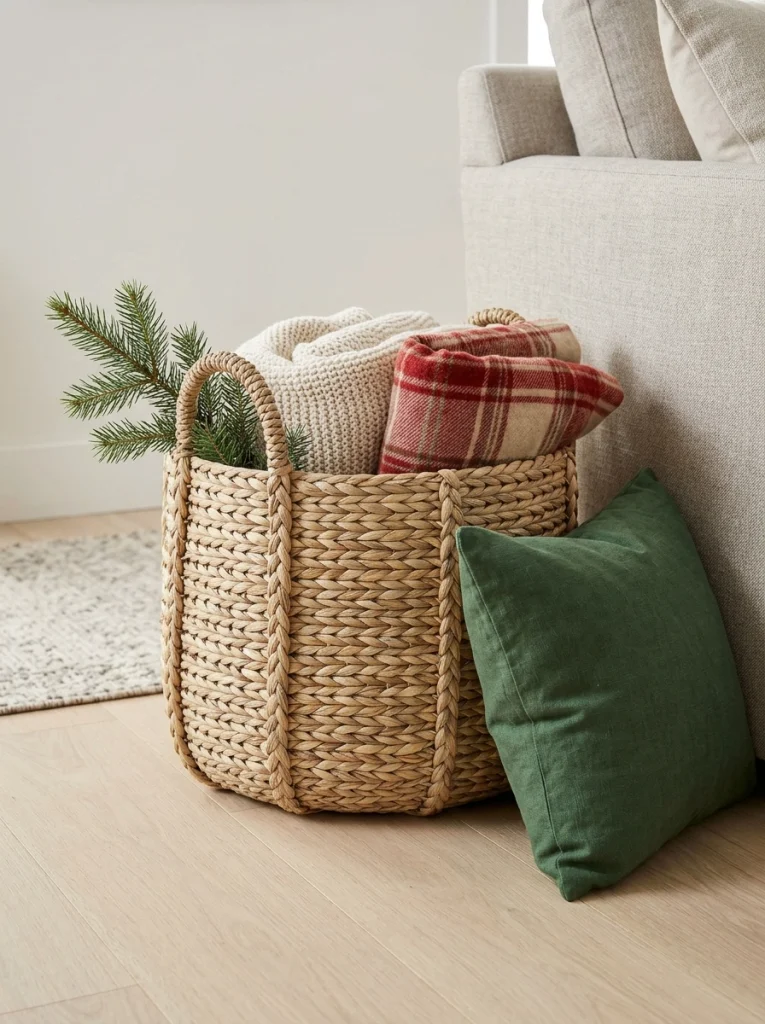
A decorative basket earns its place in the living room because it keeps useful items close while adding texture. Choose a 16- to 20-inch-wide woven basket costing around $18 to $35 from IKEA, HomeGoods, or a local home store. Fill it with two or three folded blankets in seasonal colors, such as cream, red plaid, and deep green. Position it beside the sofa or under a console table where it won’t block a walkway. If the basket has an open weave, tuck a fabric liner inside to prevent delicate blankets from snagging. Avoid filling it with ornaments just for decoration, especially if the basket will be moved regularly. A small artificial pine sprig tied to the handle adds a seasonal detail without getting in the way. This idea is particularly useful in apartments where storage is limited and every decorative piece has to serve a practical purpose. After Christmas, swap the plaid blanket for neutral throws and keep using the basket all winter.
17. Bring in Fresh Evergreen Branches for a Natural Look
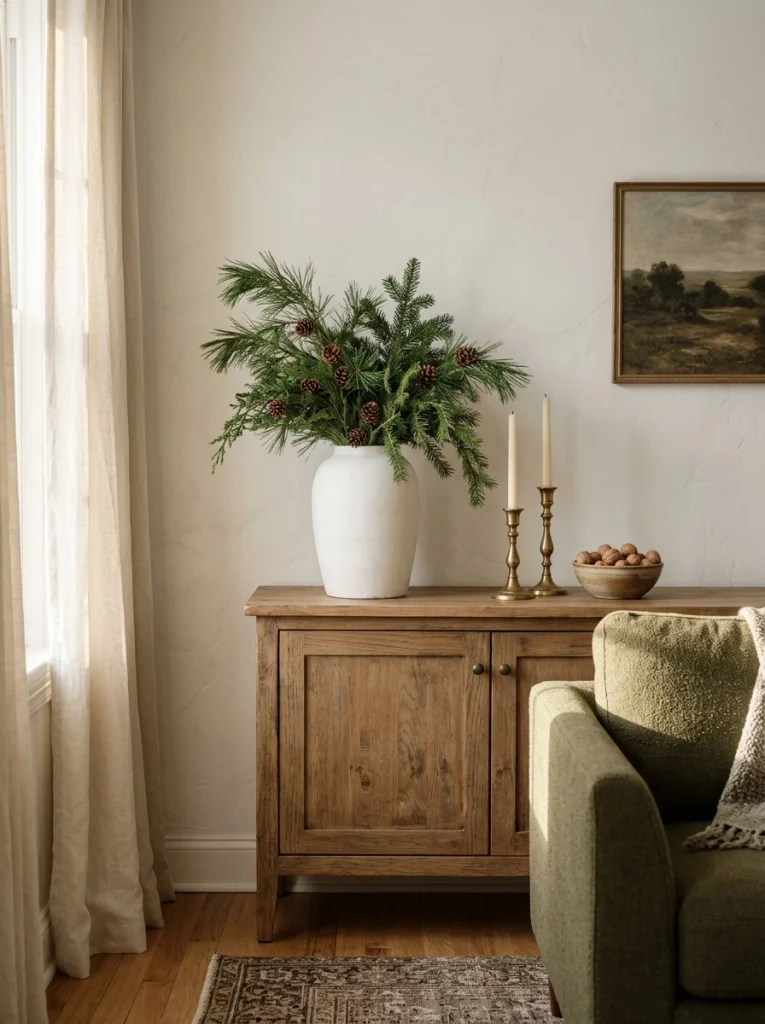
Fresh greenery is a lovely option if you prefer a natural Christmas look and don’t want to buy another large decoration. Pick up a small bundle of fir, pine, or cedar branches from a local Christmas tree stand for around $5 to $15. Trim the stems at an angle and arrange them in a sturdy vase with clean water. Remove needles that sit below the waterline and check the water every couple of days. Place the vase on a sideboard or coffee table away from heaters and direct heat sources, since warm air dries branches quickly. A ceramic vase gives the arrangement enough visual weight to balance the loose shape of the greenery. Add a few pinecones or a single velvet ribbon, but leave most of the branches visible. If sap gets on the vase, wipe it promptly with a suitable cleaner rather than letting it harden. Once the branches dry out, remove them and compost them where local facilities allow.
18. Decorate the Walls With Winter-Inspired Artwork
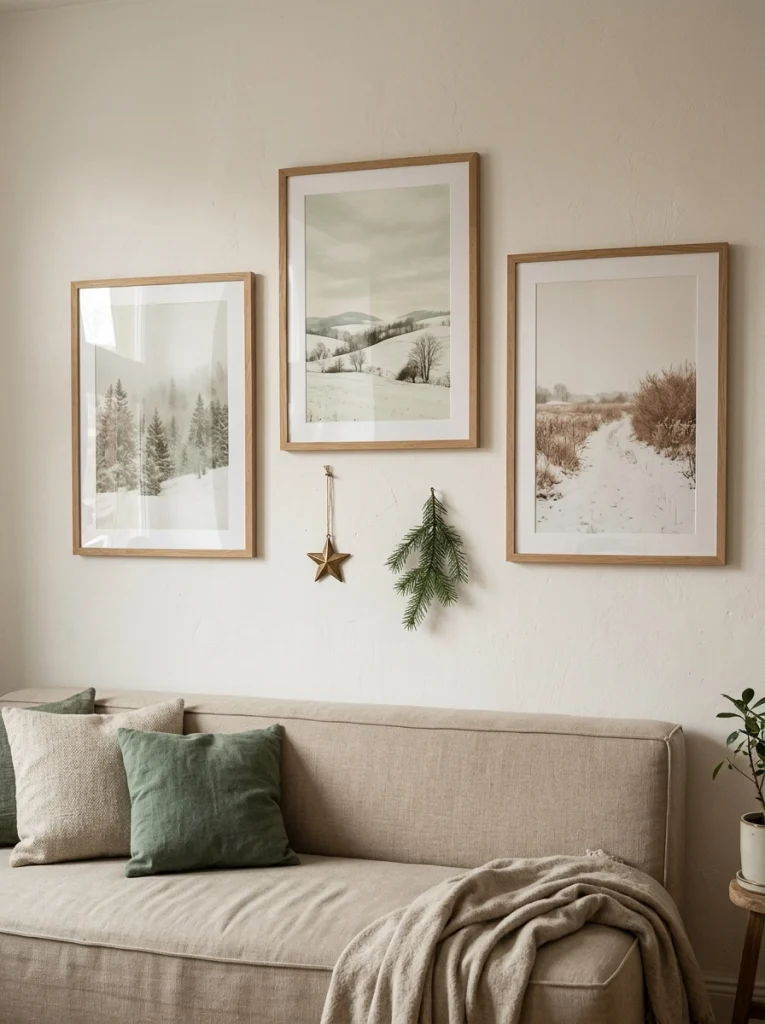
Changing a few wall prints is an easy way to make a living room feel seasonal without filling every surface with ornaments. Choose two or three winter landscape prints sized 8 by 10 or 11 by 14 inches, which can cost around $10 to $30 for a set of inexpensive prints and frames. Look for snowy forests, vintage botanical illustrations, or muted winter scenes rather than large pieces with bright holiday lettering. Arrange the frames above a console table or sofa, keeping the gaps between frames around two to three inches. If you’re renting, use picture-hanging strips rated for the combined weight of the frame and artwork, and follow the product instructions carefully. Place a small evergreen branch in a vase below the gallery wall to connect the art with the rest of the room. Neutral frames help the prints work with existing decor after December, so you won’t have to replace everything when the season ends.
19. Use a Slim Christmas Tree in a Small Living Room
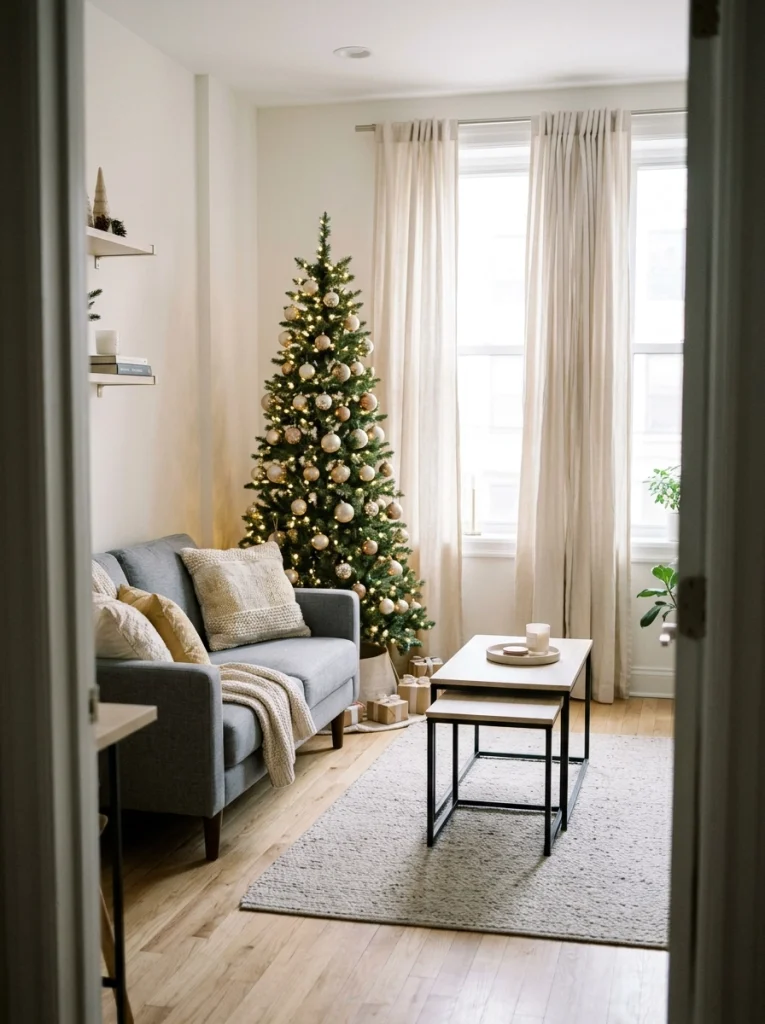
A full-width tree can make a small living room feel crowded, even when the decorations are beautiful. Choose a slim artificial tree about 18 to 28 inches wide and place it in an unused corner near an outlet. Slim 6-foot trees typically cost around $45 to $120, depending on lighting and branch quality. Decorate it with smaller ornaments and narrow ribbon so the branches remain visible. Use a compact tree collar or simple fabric skirt rather than a bulky basket that takes up extra floor space. Keep at least 30 inches of clear walking space along the main route through the room whenever the layout allows. If you have a small apartment, decorate vertically with wall garlands and shelf ornaments instead of adding multiple floor displays. For more space-saving inspiration, see [INTERNAL LINK: article about small living room decorating ideas]. A slimmer tree still gives you the glow and tradition of Christmas while leaving enough room for everyday living.
20. Create a Cozy Fireplace Look With Lanterns
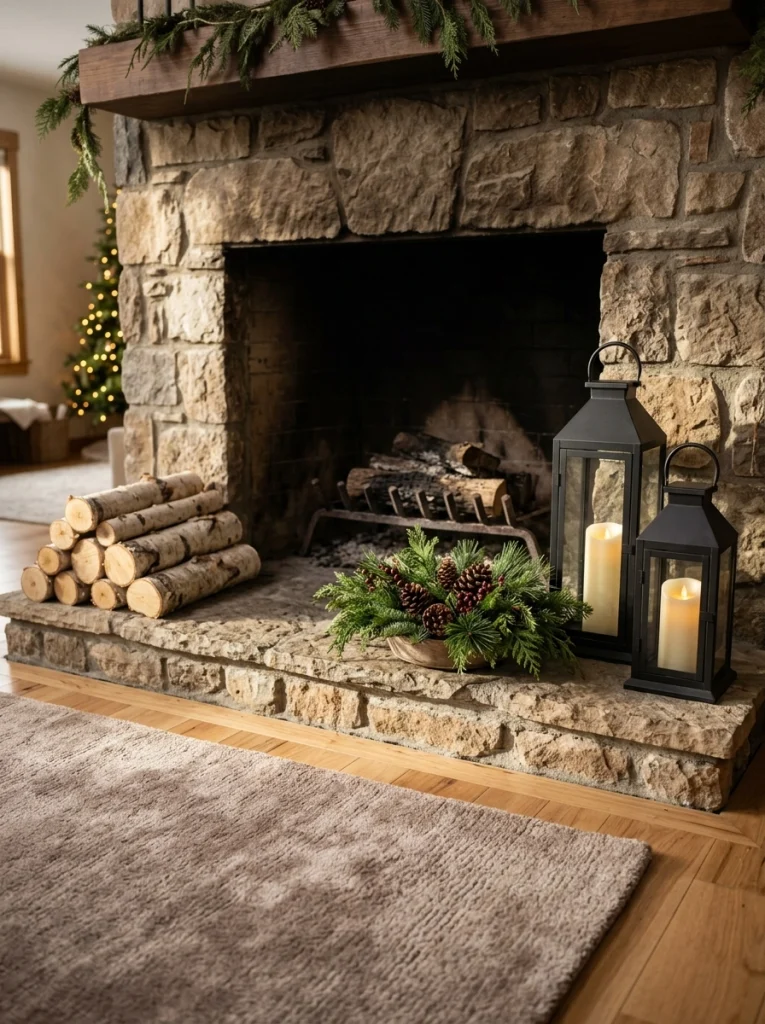
Lanterns create a warm focal point around a fireplace, even when the fireplace itself isn’t being used. Choose two lanterns between 12 and 20 inches tall, with a combined budget of around $25 to $60 from HomeGoods, Walmart, or a thrift store. Place the taller lantern at one side of the hearth and the shorter one near the opposite corner. Add flameless pillar candles and a few evergreen clippings outside the lanterns. This uneven arrangement looks more natural than lining up identical objects in a row. If your fireplace is operational, follow the manufacturer’s clearance guidelines and never place decorative lanterns or greenery where they could be exposed to flame or excessive heat. Keep the hearth clear of loose ribbons and fabric, too. For a nonworking fireplace, a neat stack of birch logs adds texture behind the lanterns. Dust the metal frames before storing them, and reuse them with neutral candles after the Christmas decorations come down.
21. Bring in Vintage Christmas Ornaments and Thrifted Finds
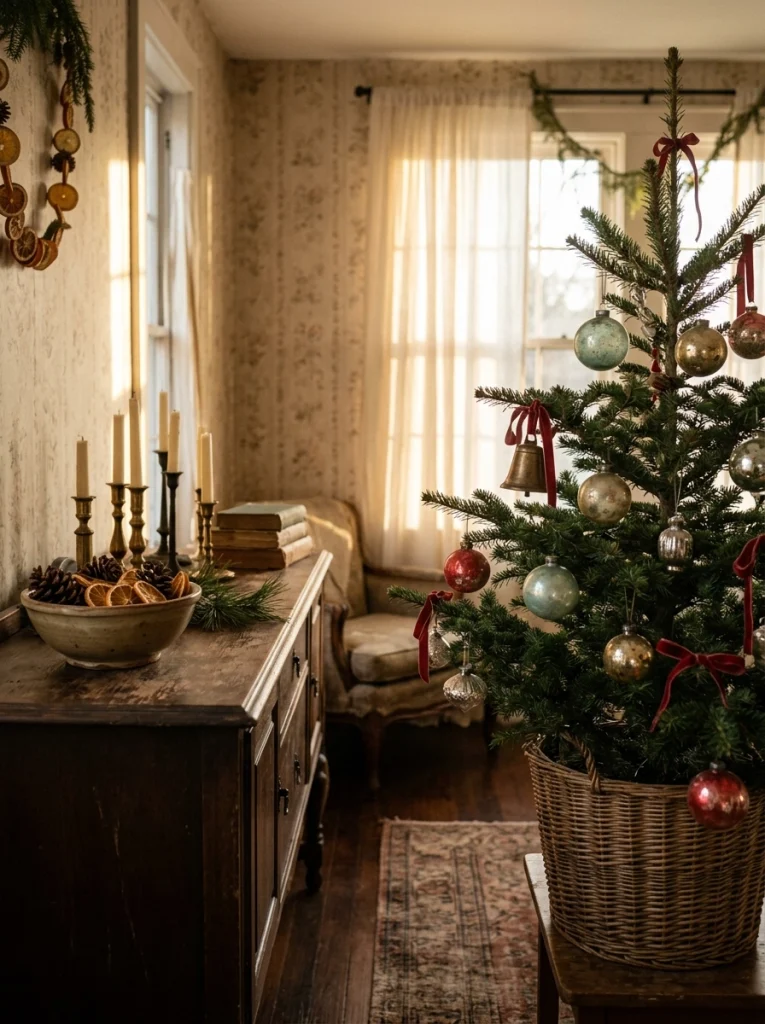
Vintage decorations give a room a sense of history, particularly when they’re mixed with simple modern furniture. Visit a thrift store or Facebook Marketplace and look for glass ornaments, old brass bells, ceramic figurines, or a small wooden decoration. Set a budget of $20 to $40 for a handful of secondhand pieces rather than buying an entire collection at once. Inspect glass ornaments for cracks and avoid hanging fragile pieces where children or pets can reach them. Group a few vintage finds on a wooden sideboard or use them as special ornaments on the upper branches of your tree. Pair them with plain velvet ribbon so their details remain visible. If the colors vary, repeat one shade elsewhere in the room, perhaps in a cushion or throw, to tie the display together. Keep valuable or delicate pieces in padded storage boxes between seasons. The mix of old and new makes the room feel collected over time rather than decorated from a single store display.
22. Finish With a Warm, Scented Christmas Atmosphere
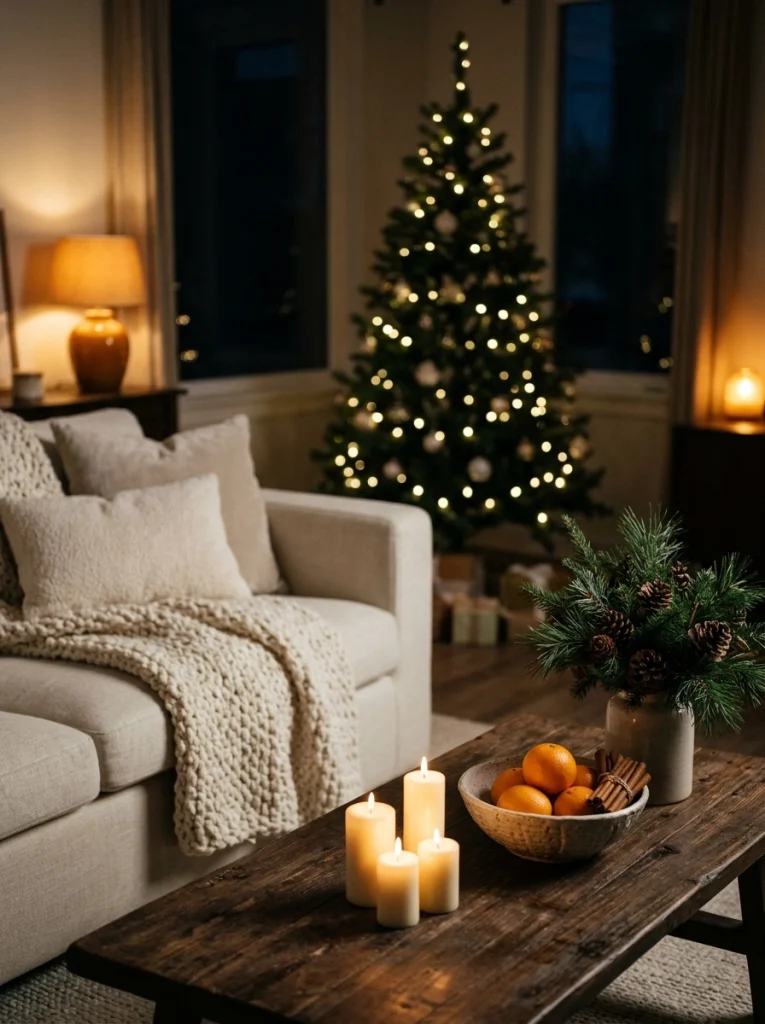
The final touch is the feeling of the room after the decorations are in place. Warm light, comfortable textures, and a subtle seasonal scent often do more than another shelf full of ornaments. Use two or three light sources with warm 2700K bulbs, such as a table lamp, a floor lamp, and your Christmas tree lights. Add a bowl of oranges and cinnamon sticks to a coffee table for a natural seasonal detail, or use a lightly scented candle on a stable, heat-resistant surface. Candles should never be left burning unattended, and scented products should be used with care around pets or anyone sensitive to fragrance. If you prefer no fragrance, skip it entirely. A clean room, a folded blanket, and softly lit greenery already create a welcoming atmosphere. Before guests arrive, clear the coffee table of everyday clutter and put extra throws in a basket. These small finishing touches help the whole room feel ready for a relaxed evening at home.
Mistakes That Ruin the Look
Even beautiful Christmas decorations can feel messy when the room lacks balance. A few small adjustments make a real difference.
- Using too many competing colors: Choose two or three main colors, then repeat them across the tree, cushions, and tabletop decorations. A red-and-green room doesn’t also need several unrelated metallic finishes.
- Filling every surface: Leave some open space on shelves, the coffee table, and the console. Empty space gives your favorite decorations room to stand out and leaves useful surfaces available for everyday activities.
- Ignoring the room’s walking paths: Measure before bringing in a tree or large basket. Keep doorways clear and aim for roughly 30 inches of walking space along busy routes where the room layout permits.
- Relying on one bright ceiling light: Add warm table lamps, floor lamps, and tree lights for a softer atmosphere. Use bulbs around 2700K and avoid mixing too many different light colors.
- Putting delicate decorations within easy reach: Keep glass ornaments, small detachable pieces, and fragile village houses on higher shelves if children or pets share the room. Secure the tree and keep electrical cords out of walking paths.
Frequently Asked Questions
[Image Prompt: A photorealistic cozy Christmas living room overview showing a green tree, neutral sofa, red accent cushions, simple mantel greenery, and warm table lamps in a balanced, uncluttered arrangement. The room is photographed from a wide doorway angle in soft afternoon light, no people, no text or words anywhere in the image.]
[Alt Text: A balanced Christmas living room with a decorated tree, seasonal cushions, greenery, and warm layered lighting.]
1. What are the best Christmas living room decor ideas on a budget?
The best Christmas living room decor ideas on a budget include changing pillow covers, adding warm fairy lights, styling a tray with greenery, and decorating with thrifted ornaments. Start with items you already own and spend your money on one or two details that make the biggest visual difference.
2. How can I make my living room feel cozy for Christmas?
Use warm lighting, soft blankets, textured cushions, and natural greenery. A few smaller lamps and warm white tree lights create a more comfortable atmosphere than relying on a bright overhead light alone.
3. What colors look best in a Christmas living room?
Traditional red, green, and gold work well in classic interiors, while cream, beige, and natural wood suit neutral homes. Black, white, and gold create a more modern appearance, especially with simple furniture and a green tree.
4. How do I decorate a small living room for Christmas?
Choose a slim tree, decorate shelves vertically, and use wall or window greenery instead of several large floor displays. Keep the coffee table relatively clear and use baskets to store blankets or everyday items.
5. How much does it cost to decorate a living room for Christmas?
A simple makeover using pillow covers, greenery, and lights can cost around $30 to $75 if you already own a tree. A more complete setup with a new tree, ornaments, textiles, and tabletop decorations can cost $150 to $400 or more.
6. When should I decorate my living room for Christmas?
Many households begin decorating in mid-November or during the weekend after Thanksgiving. Choose a date that fits your schedule, and start with the tree and lighting before adding smaller seasonal details.
Start With One Cozy Christmas Corner This Weekend
You don’t have to redecorate your entire home to create a living room that feels ready for Christmas. Pick one idea that fits your space, whether that’s a slim tree, a garland-covered shelf, or a basket of soft seasonal blankets. Set a budget of $30 to $50, use what you already have, and add a couple of thoughtful details rather than buying decorations for every surface. I’d start with warm lighting and a few coordinated pillow covers because both changes are quick, affordable, and easy to store afterward. Once that first corner feels right, you can decide whether the room needs anything else. A comfortable sofa, a softly glowing tree, and a little greenery are often all it takes to make December evenings feel special.